Publishing an audiobook, start to finish

A real book, uploaded, published, sold and listened to. Every screen here is the running app doing the actual thing.

Getting your book online

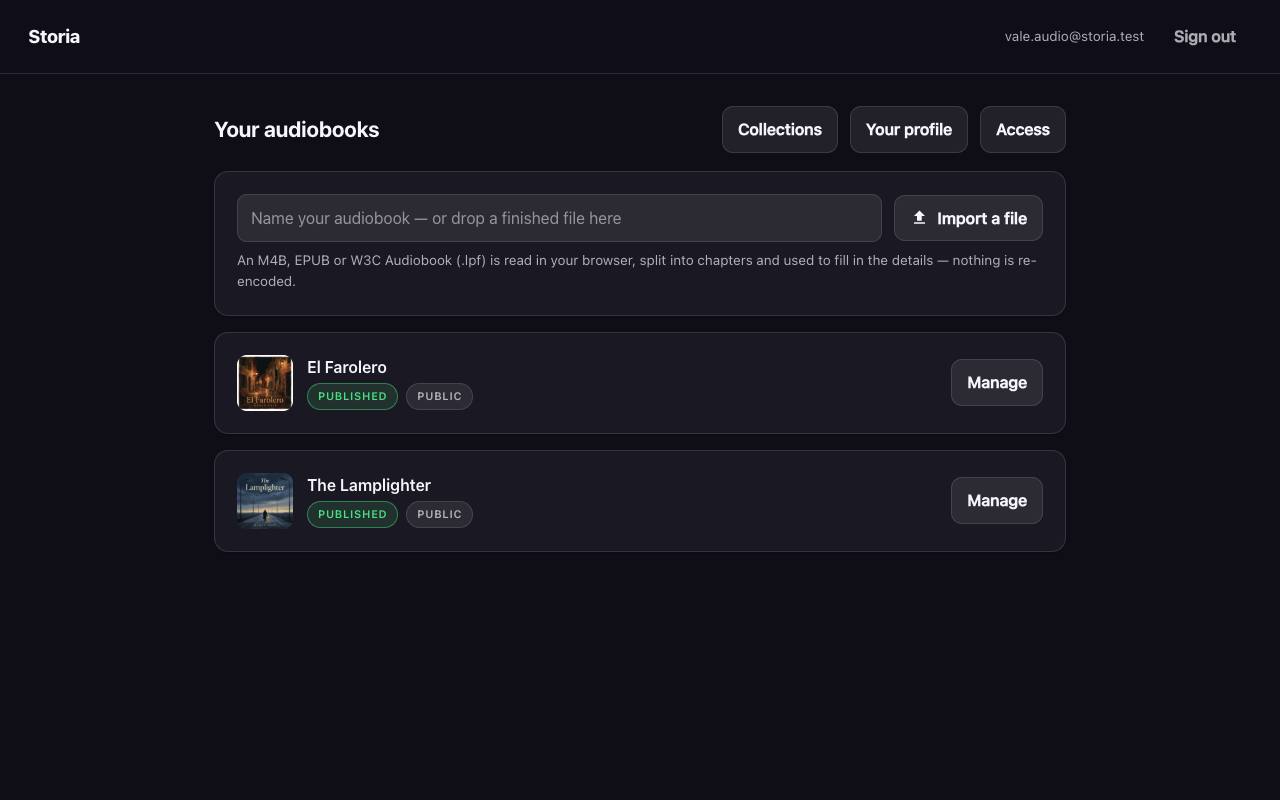
Start with the file you already have

Drop in the finished M4B, EPUB or W3C audiobook you made for everywhere else. Storia opens it in your browser and reads what is already inside — the chapters, their titles, how long each one runs, the cover art, the author — and fills the form in for you. Nothing is re-encoded, so the audio your listeners hear is the audio you mastered.
Start with the file you already have

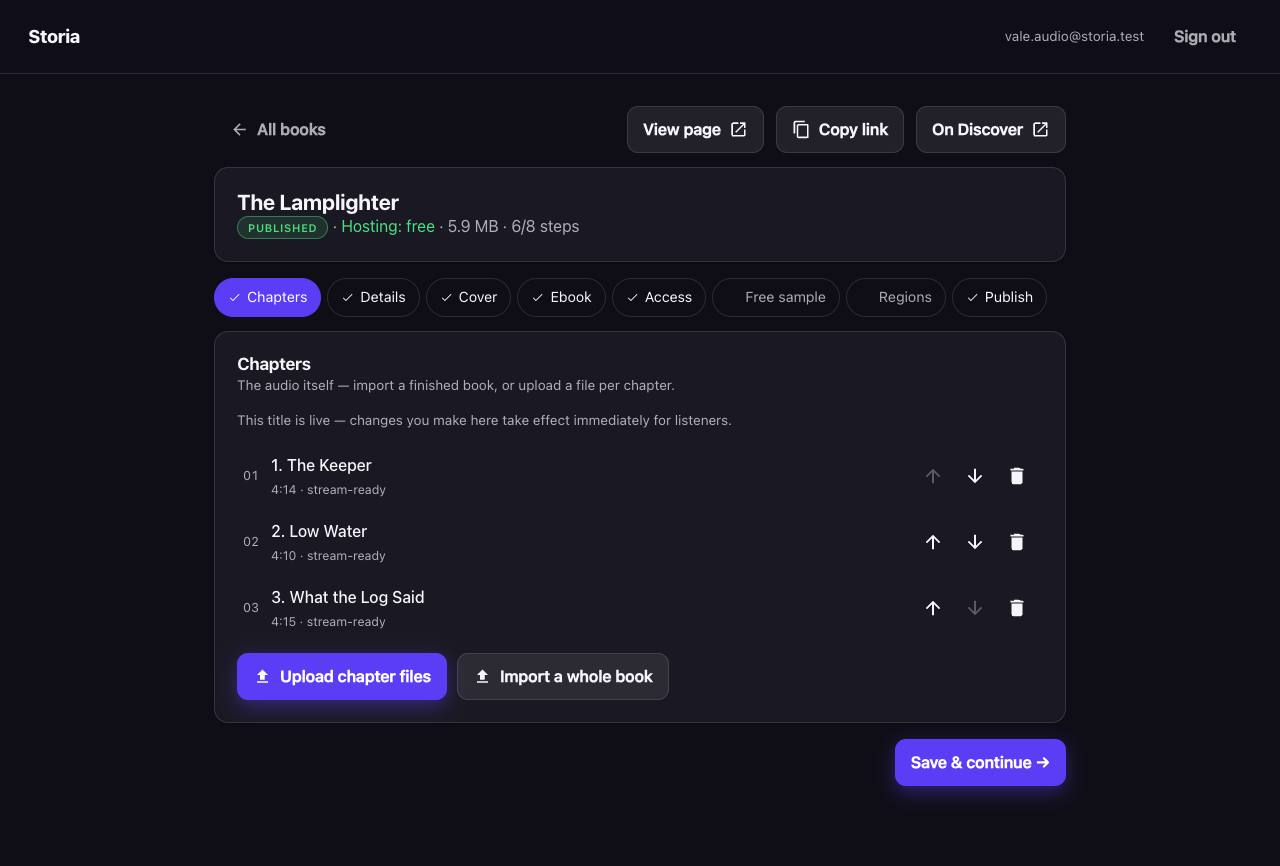
Your chapters, in your order

Every chapter, named and in sequence. Drag one to move it, drop another in later, or fix the audio on a chapter that has already been out for a year. Uploads are chunked, so a two-gigabyte file survives a hotel wifi.

Your chapters, in your order

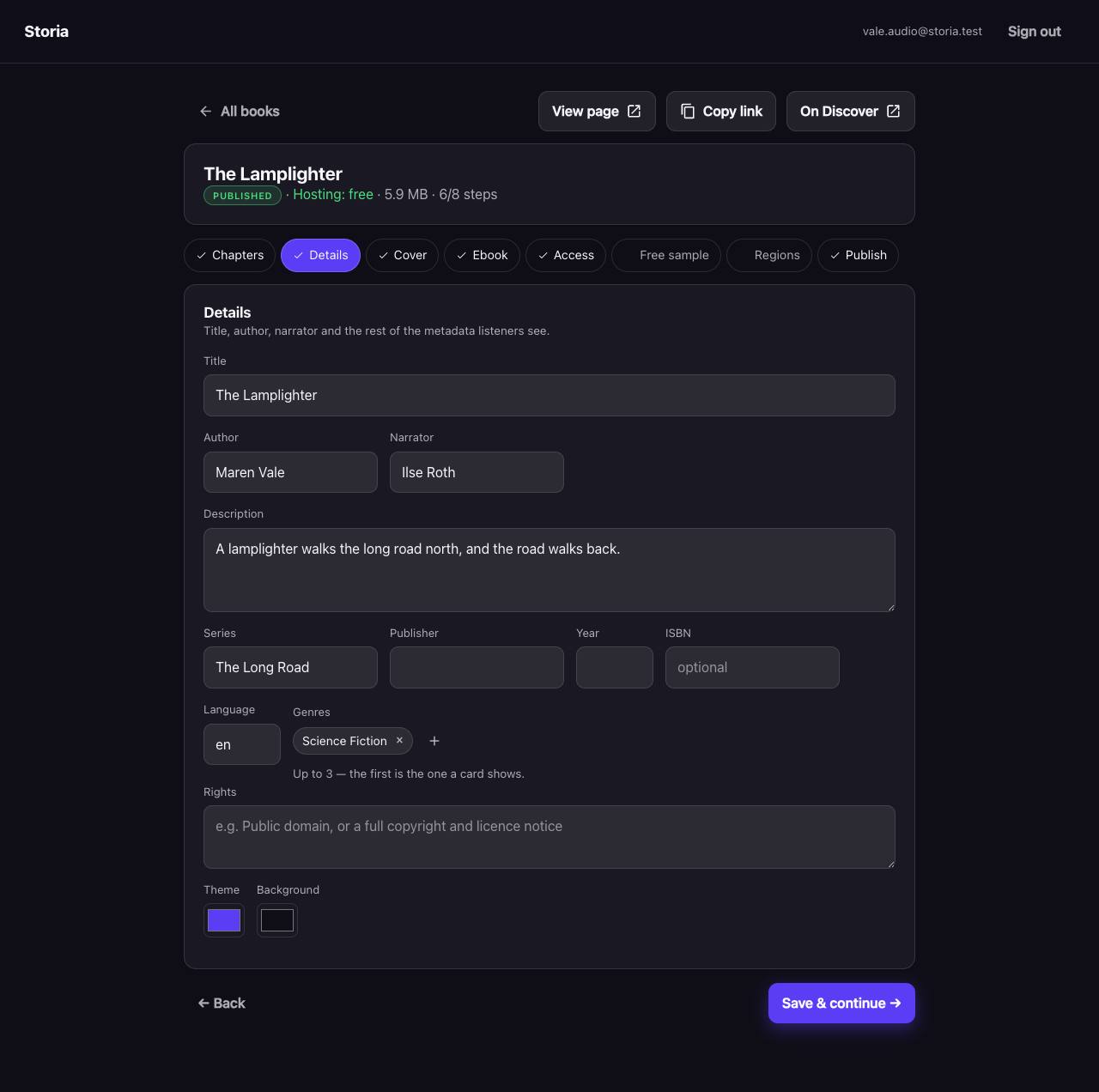
The details a listener reads

Author, narrator, series, ISBN, description, up to three genres. This is what a shopper sees before they decide, what a search engine indexes, and what appears when someone shares the link — so it is worth ten minutes.

The details a listener reads

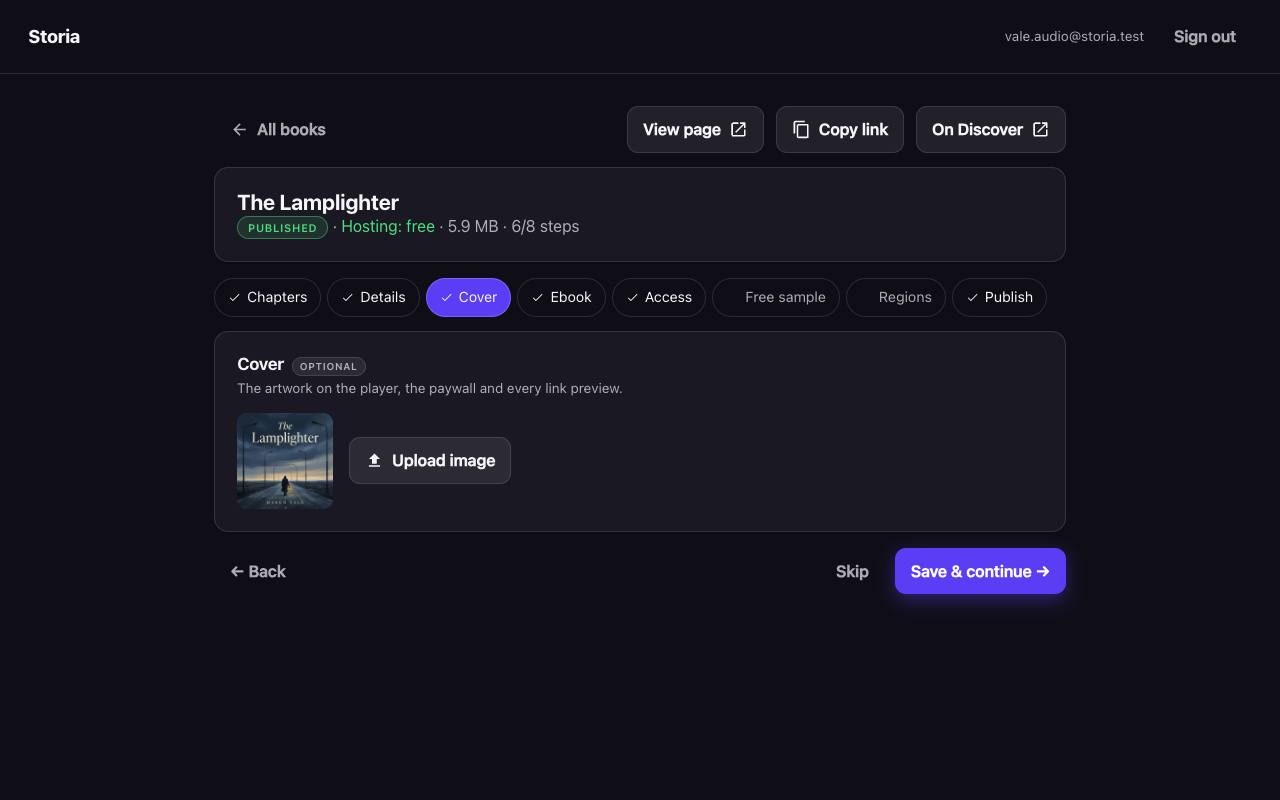
Your cover, everywhere it appears

One image does the catalogue card, the player, the phone lock screen and the preview card on social. Upload it once.

Your cover, everywhere it appears

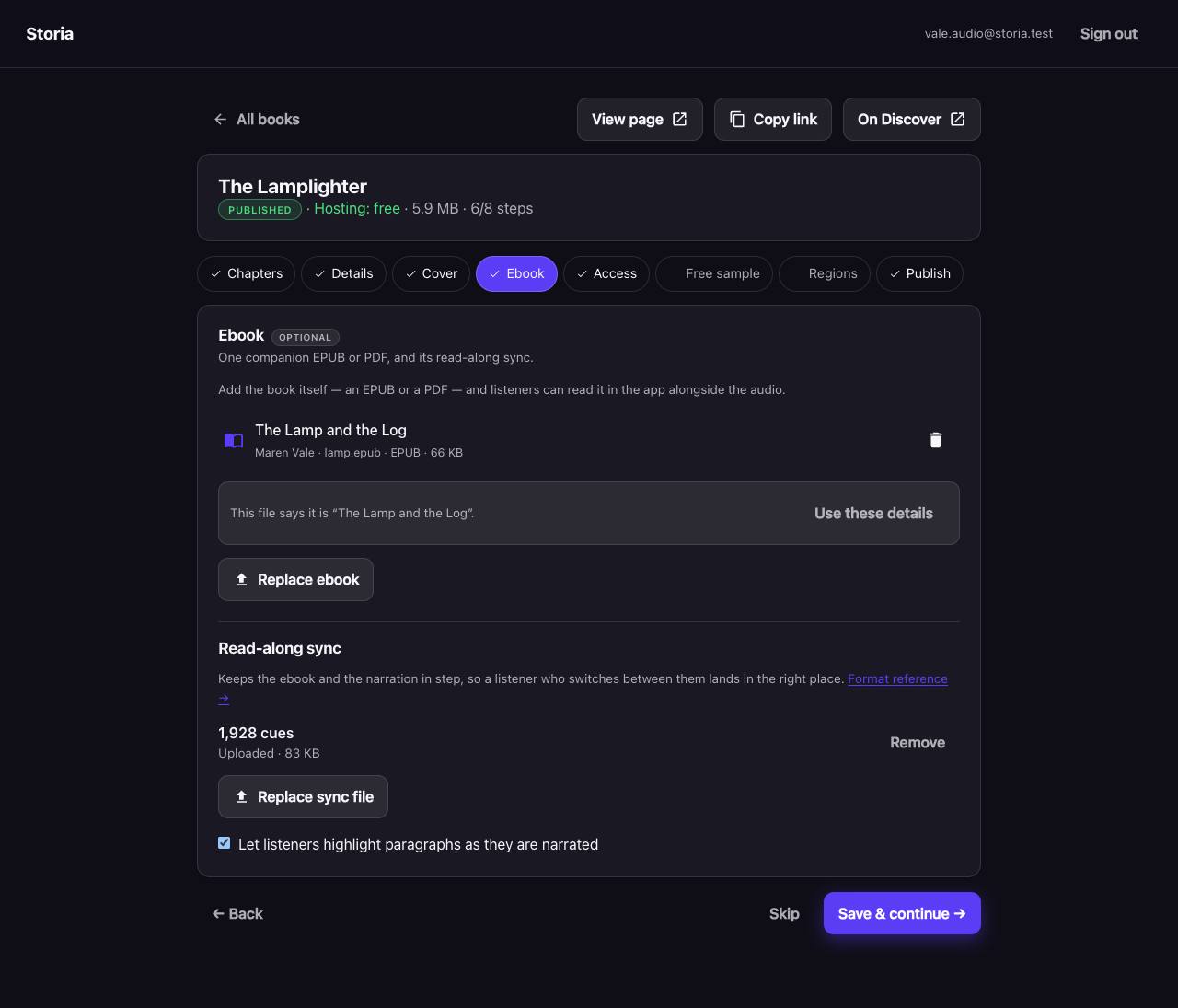
The book that goes with the audiobook

Attach the EPUB or PDF and your listeners can read as well as listen — the same purchase, the same place, no second app and no second sale. If you have narration timings, the text follows the voice word by word.

The book that goes with the audiobook

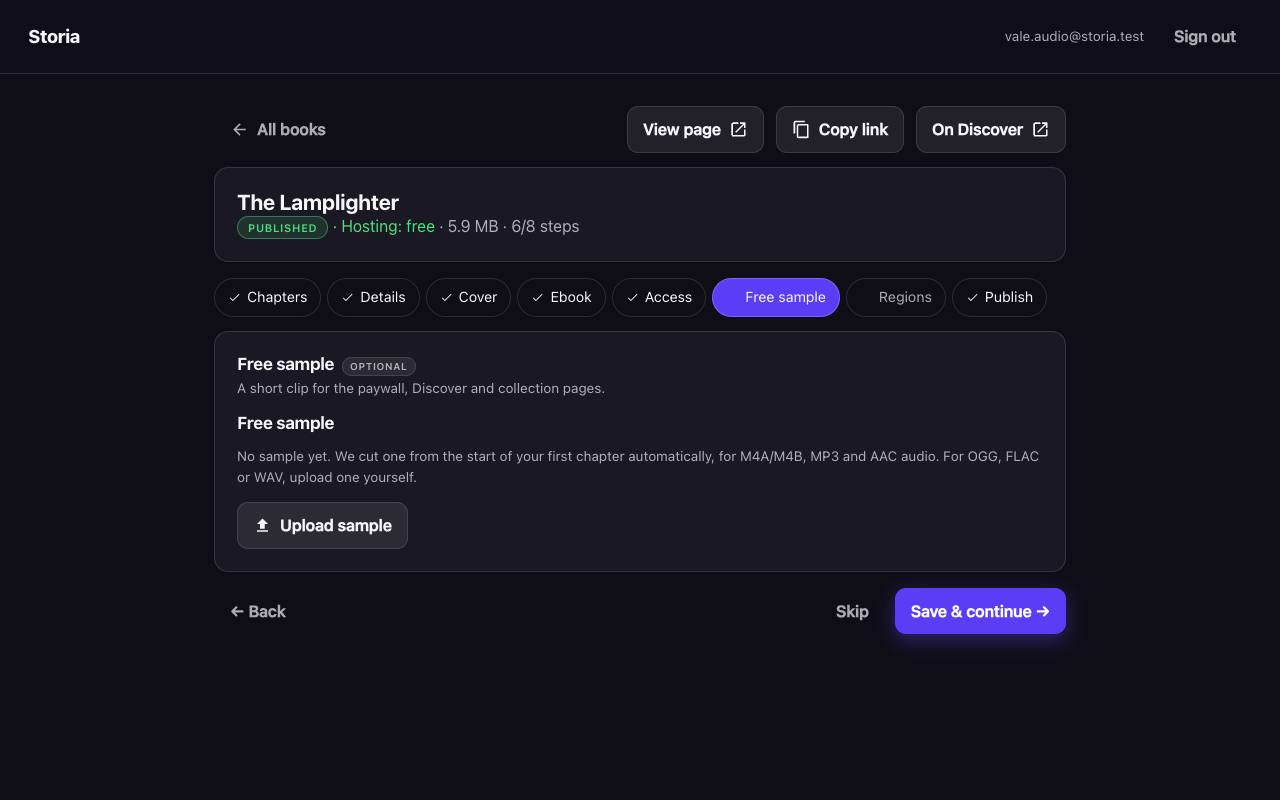
A sample anybody can hear

A free cut of the real audio, playable by someone who has not bought anything. Storia trims it for you without re-encoding, so the sample sounds exactly like the book, because it is the book.

A sample anybody can hear

Where in the world it is yours to sell

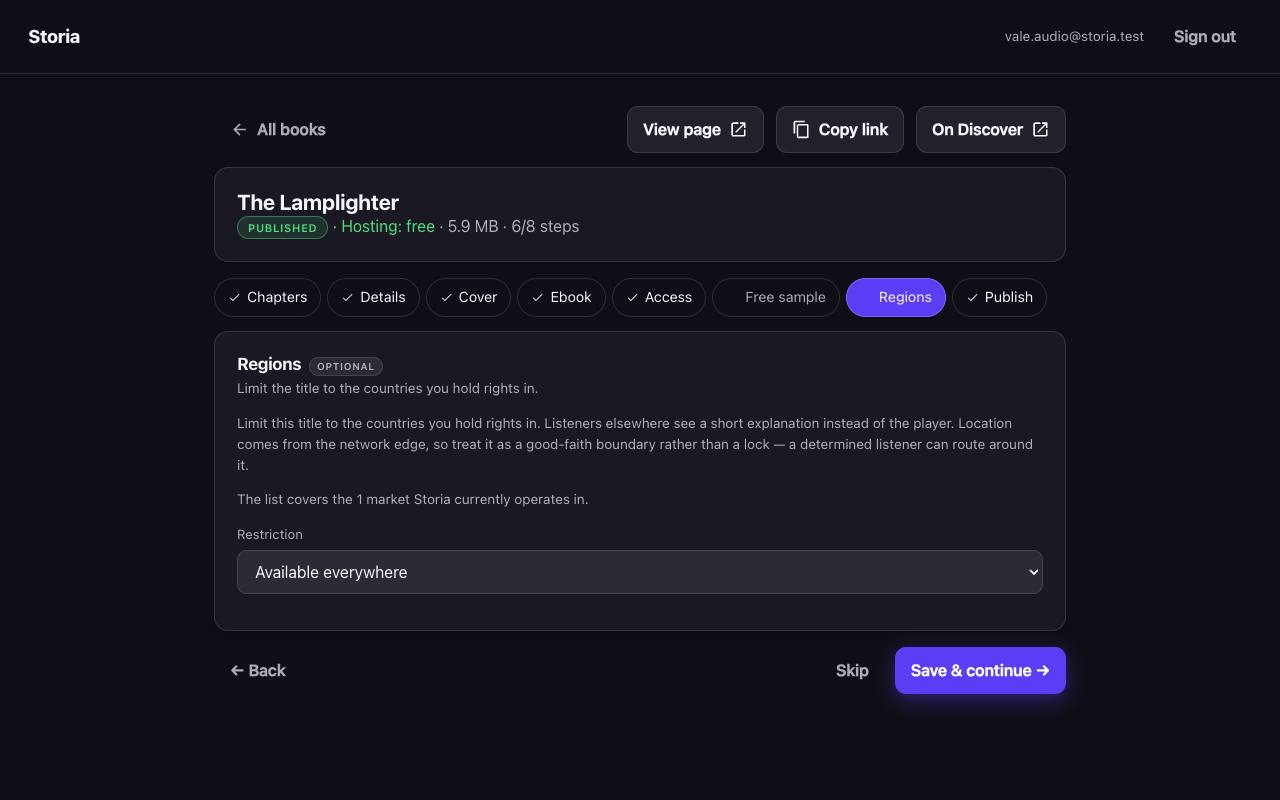
Hold audio rights in some countries and not others? Say so. A title can be limited to a list of countries or kept out of one, and the rule is enforced everywhere the title can be reached — not just on the page that mentions it.

Where in the world it is yours to sell

Going live is a decision, not a lock-in

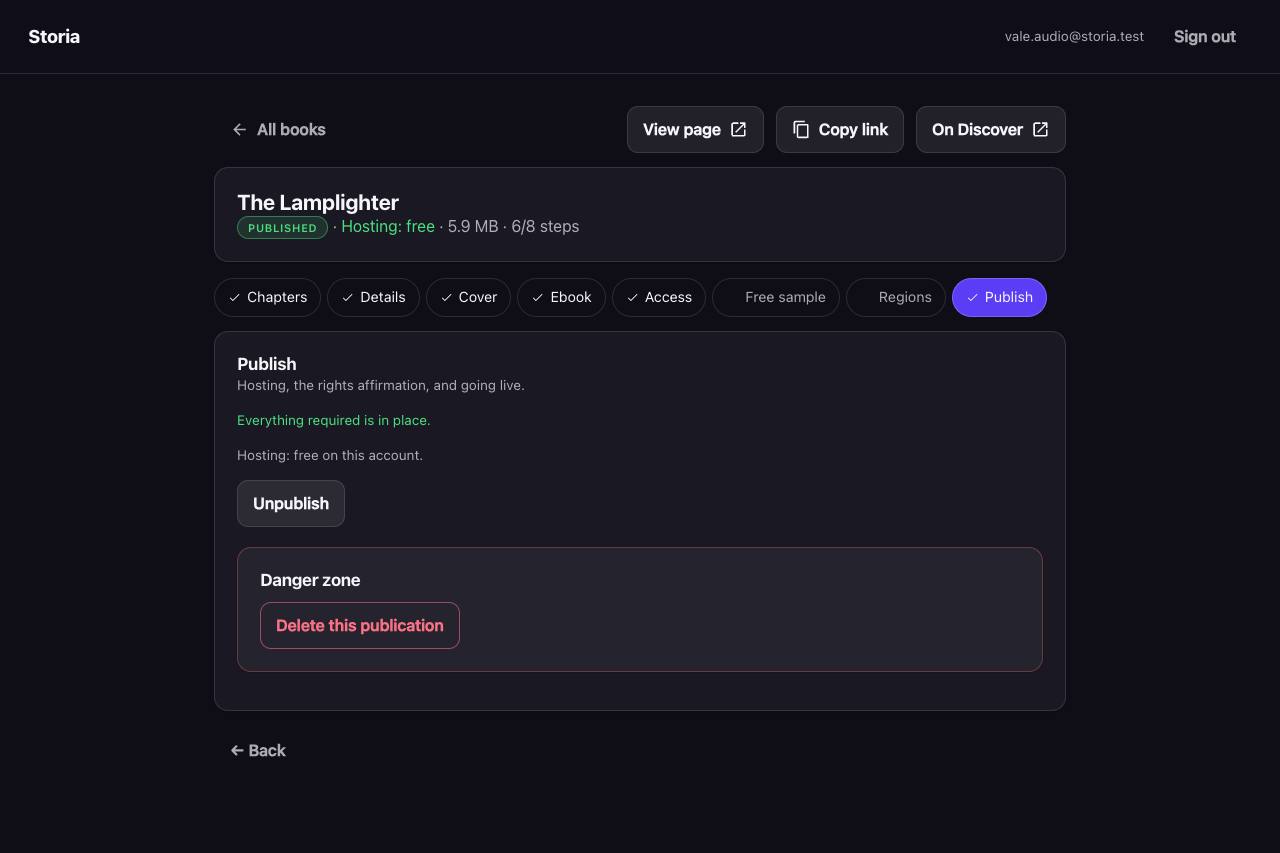
One affirmation that the rights are yours, and it is live. Nothing freezes: correct a typo, replace a chapter, re-order the book or change the price on a title that is already selling. Publishing here is not a submission you wait on.

Going live is a decision, not a lock-in

Getting paid

Sell it through your own payment account

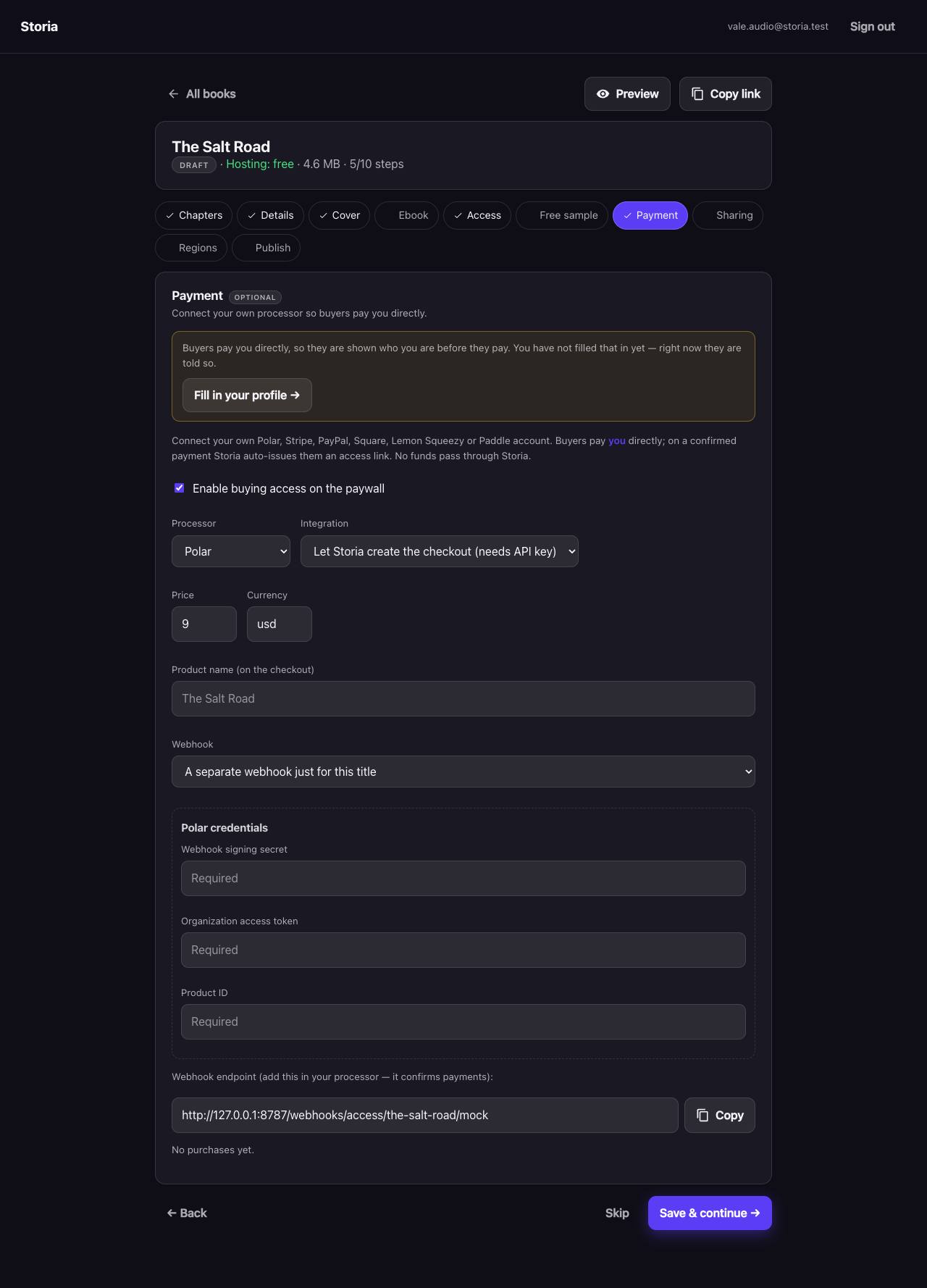
You connect your processor. Your buyers pay you, the money arrives in your account, and Storia never touches it — we take 0% and we are not the shop. That also means the customer relationship is yours: your receipts, your refunds, your name on the statement.

Sell it through your own payment account

Access that behaves like a book, not a licence

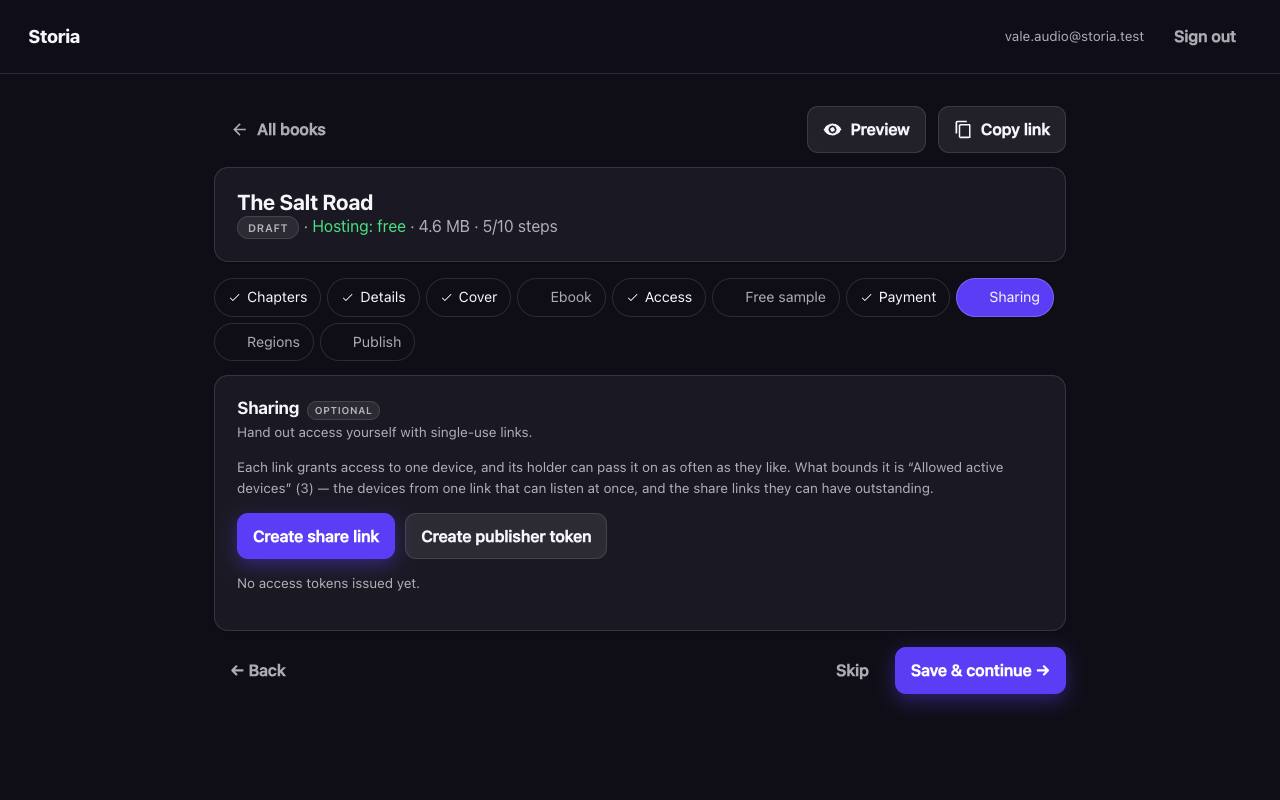
A purchase unlocks a set of devices, and the person who bought it can pass their link to the household the way they would pass a paperback. Open it on one device too many and the least-used one steps aside — no activation limits to phone anyone about.

Access that behaves like a book, not a licence

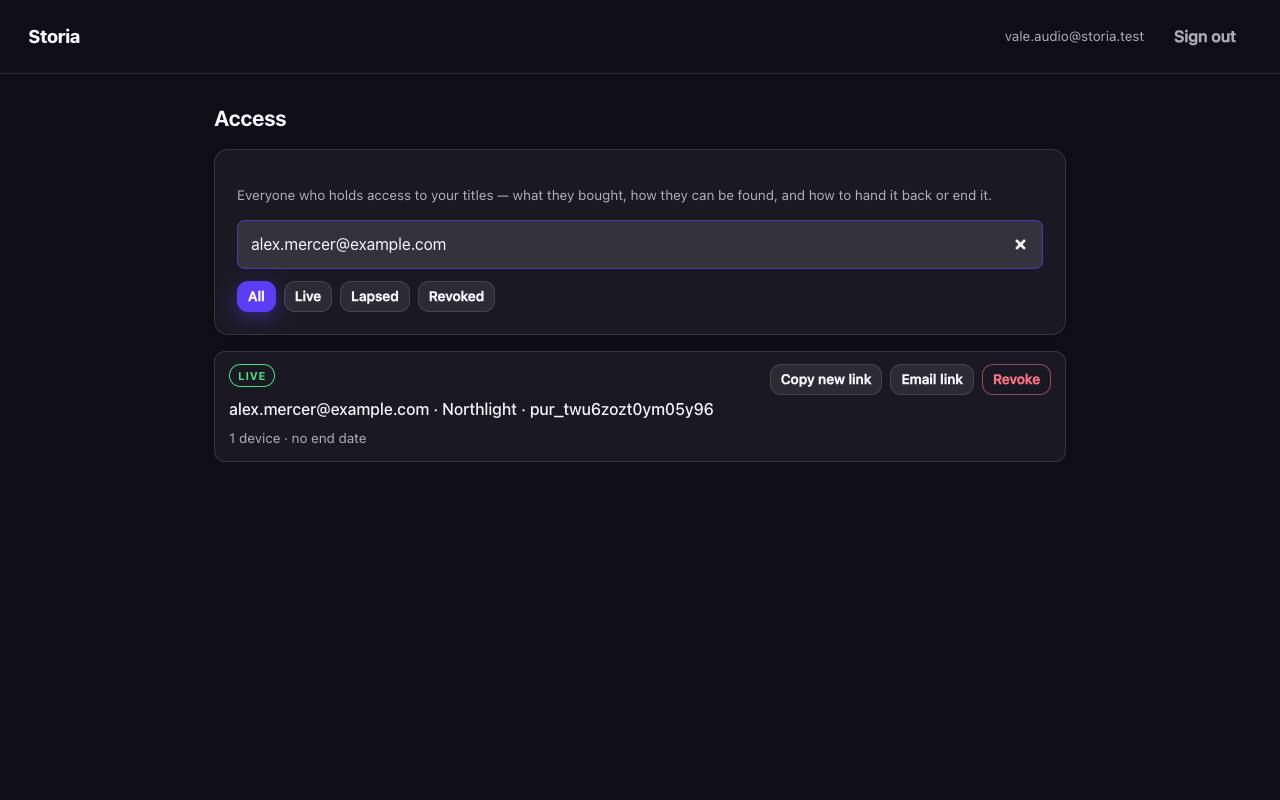
Everyone who bought it, and how to help them

Search by the address they paid with, the order number on their receipt, or what your processor called the product. When someone writes in saying the link never arrived, you can send it again — or copy a fresh one and paste it wherever they actually reached you. If a sale goes bad, ending access takes one click and reaches every device it was shared with.

Everyone who bought it, and how to help them

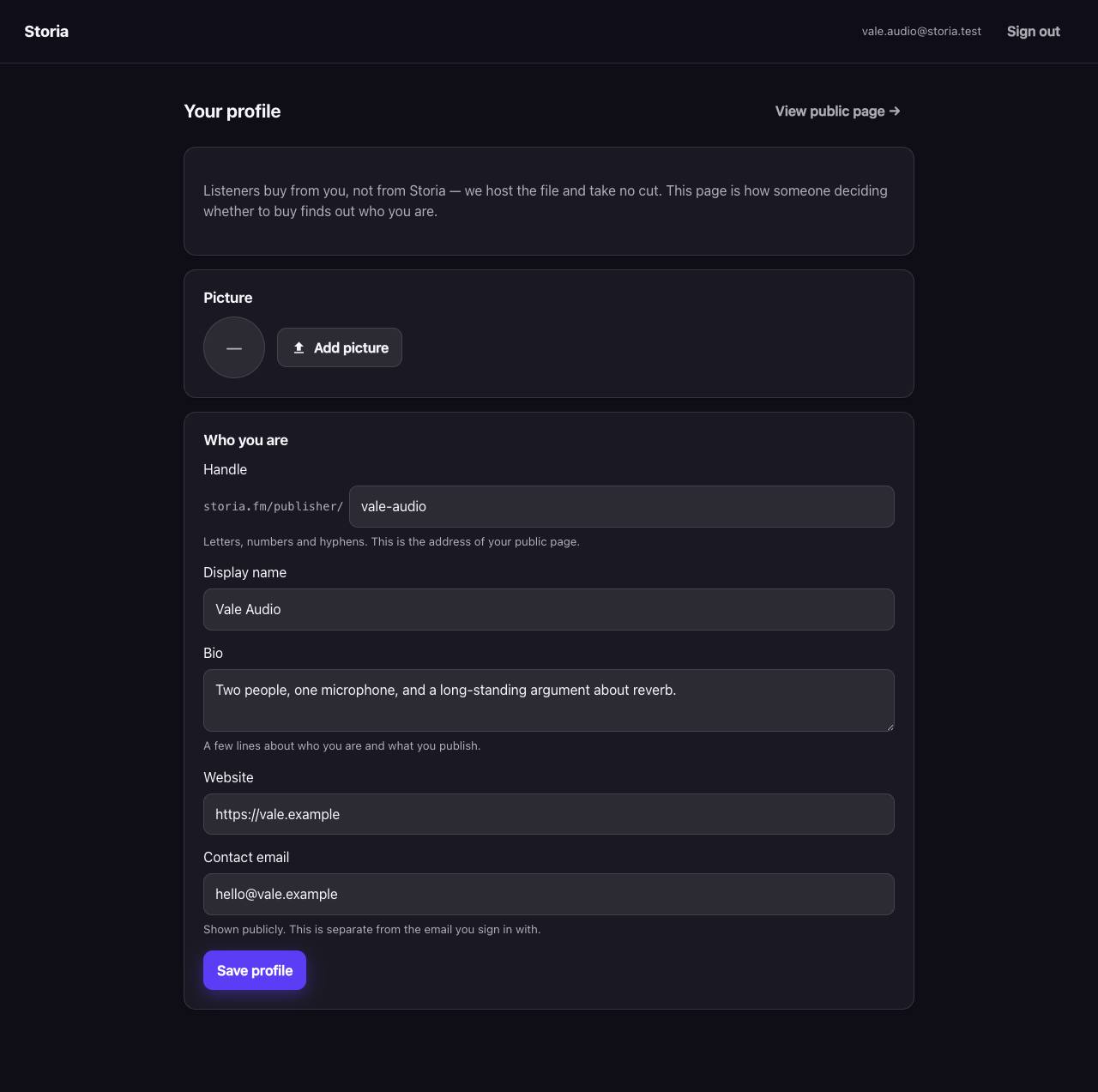
Your name on the sale

Because buyers pay you rather than a marketplace, they get to see who you are first — your name, your bio, your site, and an address for questions that is not your login. It takes a minute and it is the difference between a stranger and a publisher.

Your name on the sale

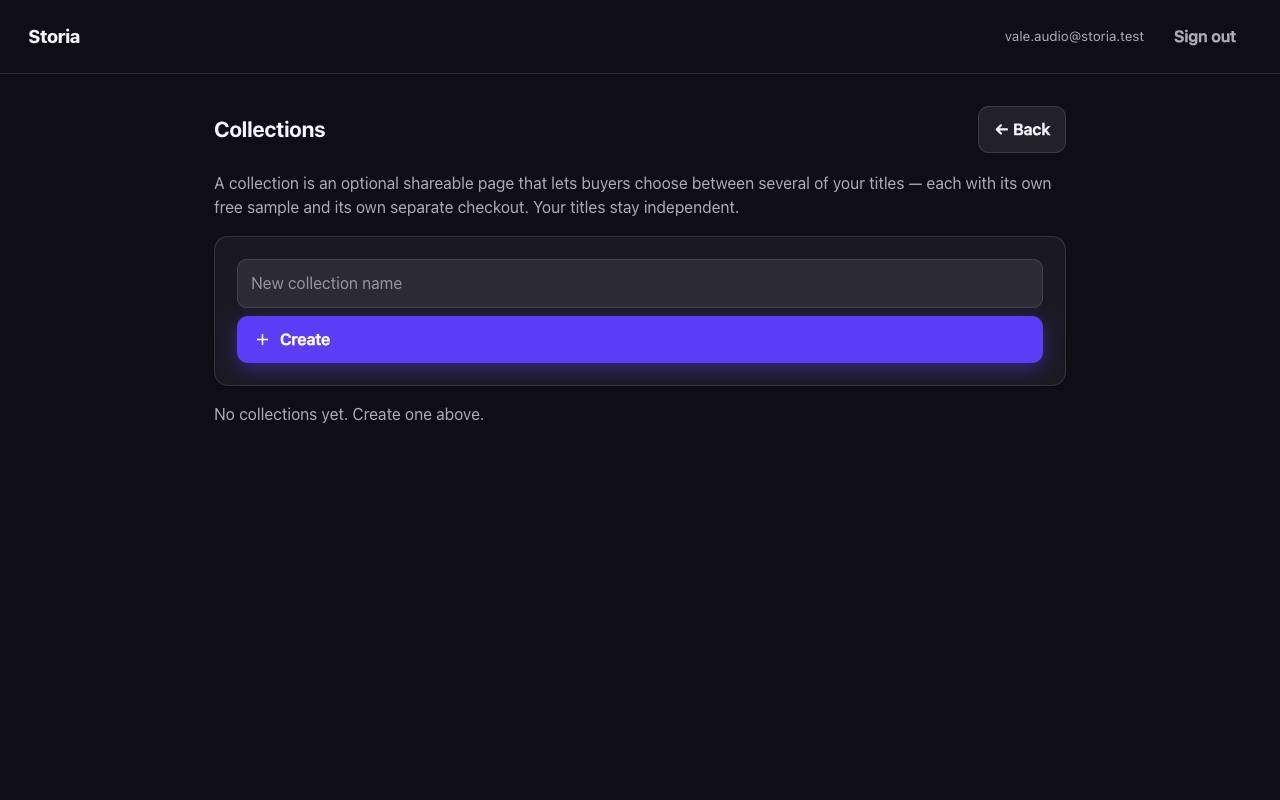
Sell several titles together

A collection is one page and one link holding a set of your titles — a series, a box set, a course. Each keeps its own free sample and its own checkout, so a reader can take the one they want or the lot.

Sell several titles together

Being found

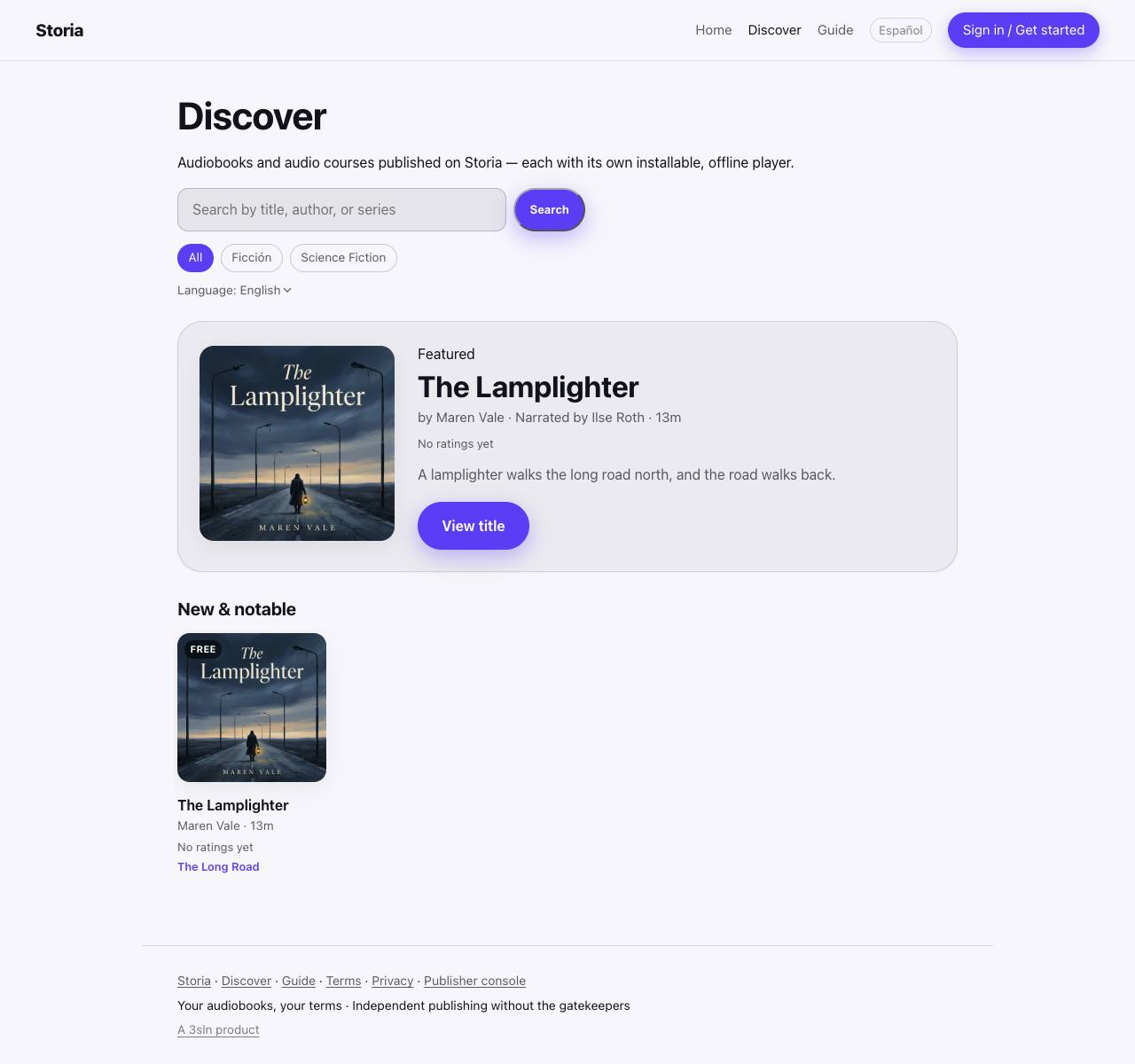
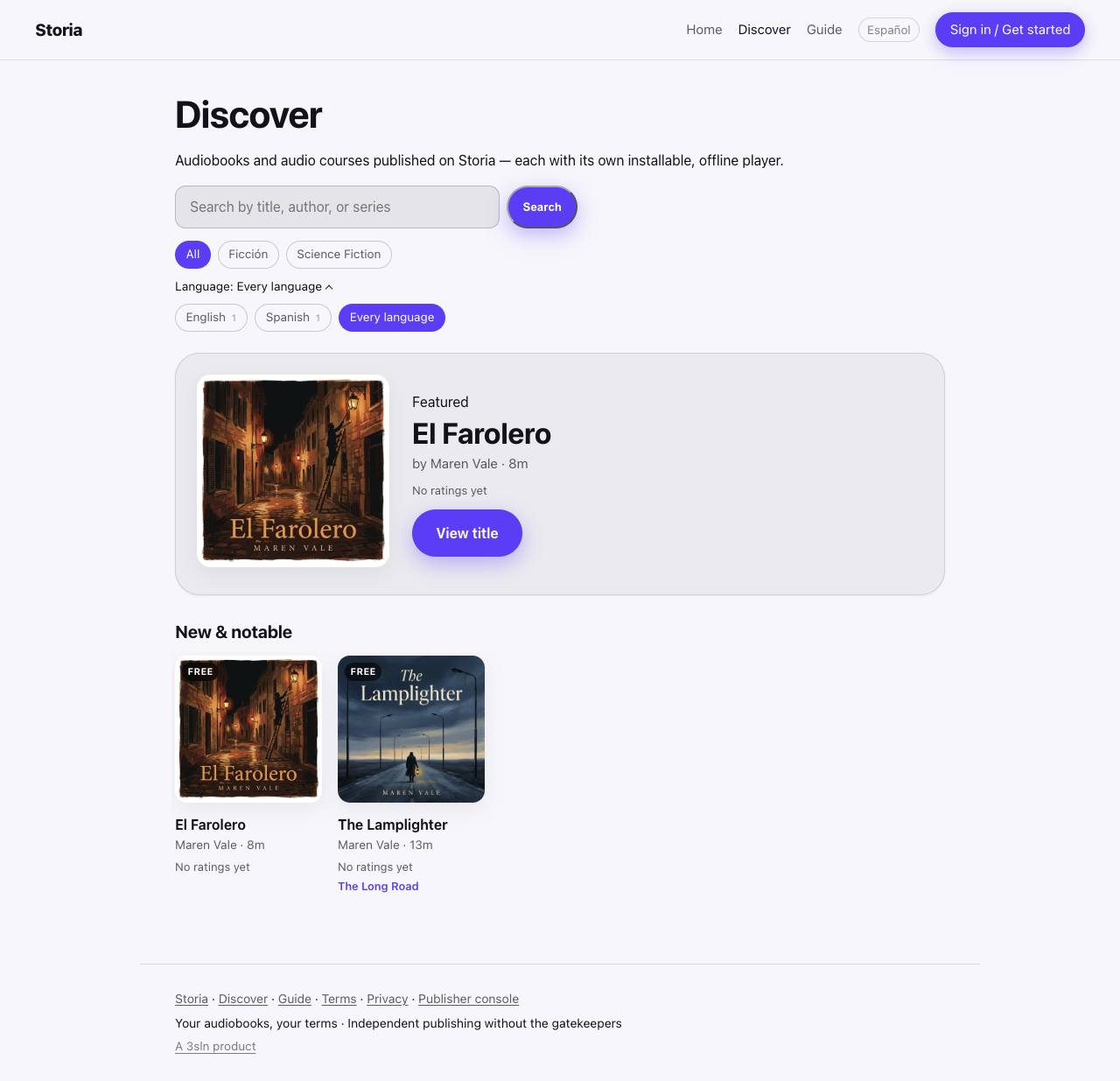
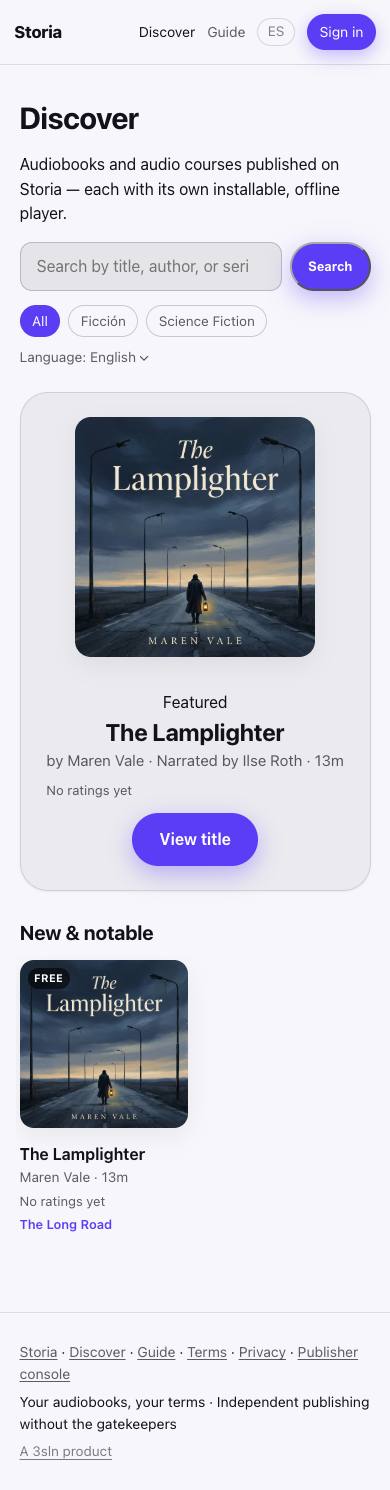
A catalogue people can actually browse

Every published title sits in a catalogue that loads as a plain page — no app to boot, nothing to wait for, and it works with JavaScript switched off. That is also what a search engine sees.

A catalogue people can actually browse

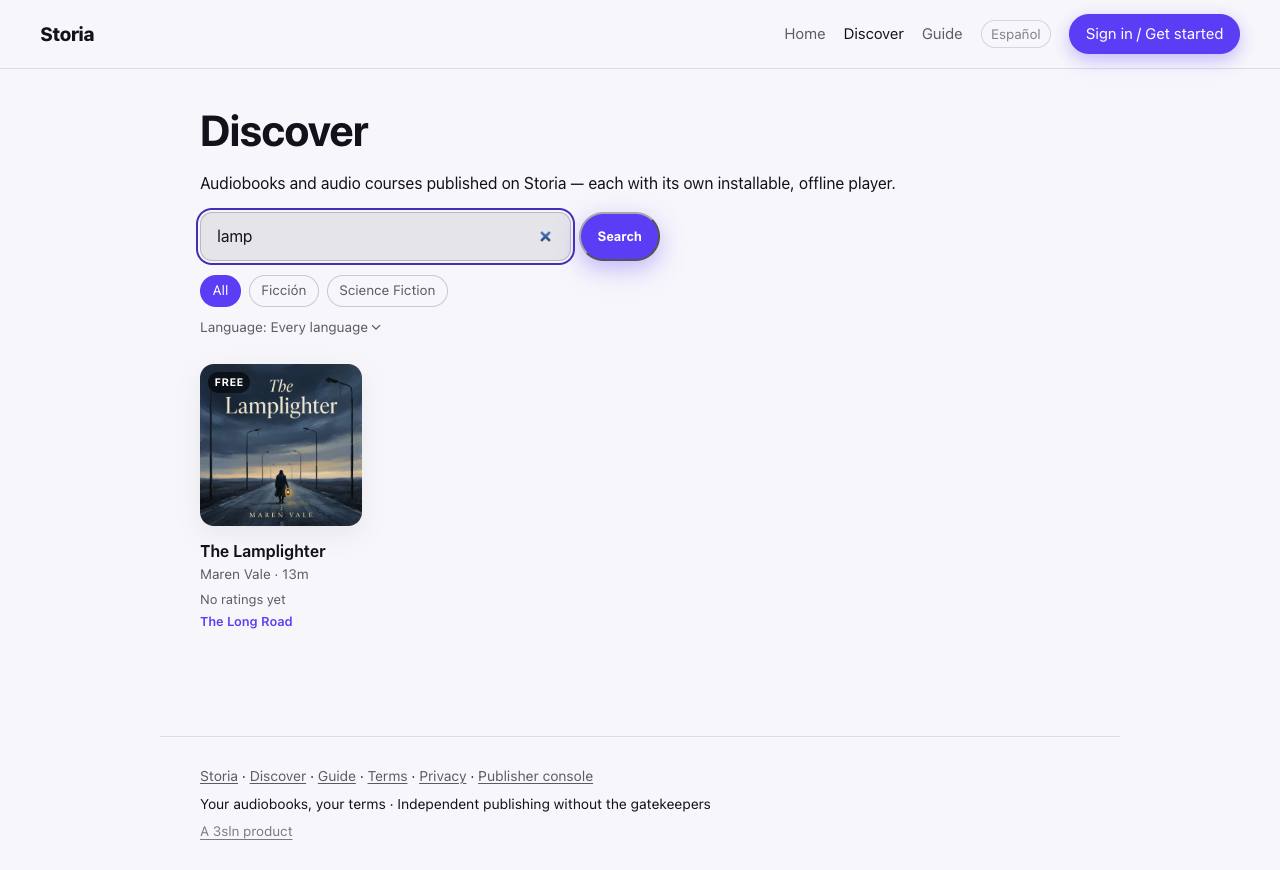
Found by name, author or series

Searching filters without reloading the page, and the URL changes with it — so a filtered catalogue is a link somebody can send to a friend.

Found by name, author or series

In the language they read

The catalogue opens in the reader’s own language, worked out from their browser before the page is even built — so for most people it is already right and stays out of the way. Opened up, every language the catalogue holds is there to be switched on or off, as many at a time as they like.

In the language they read

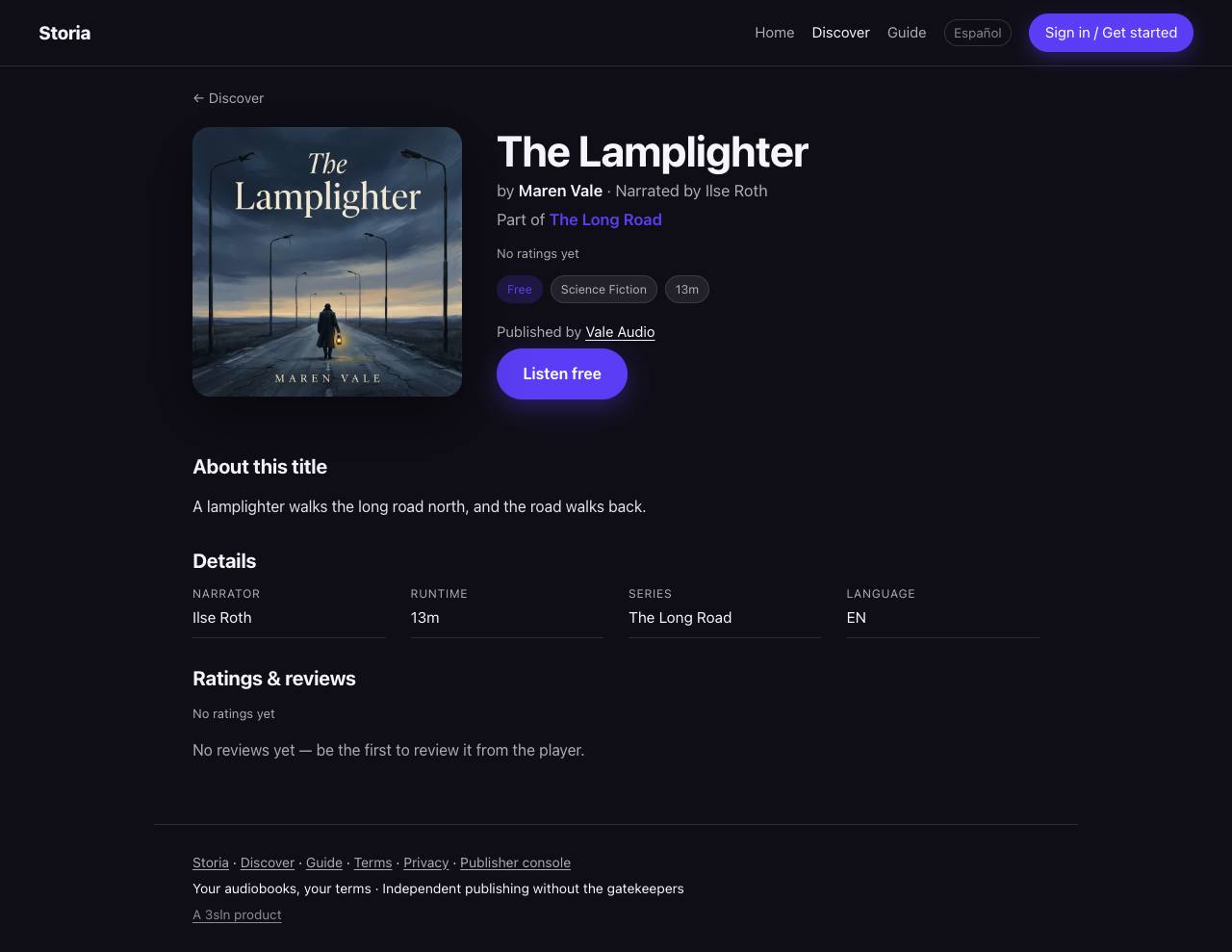
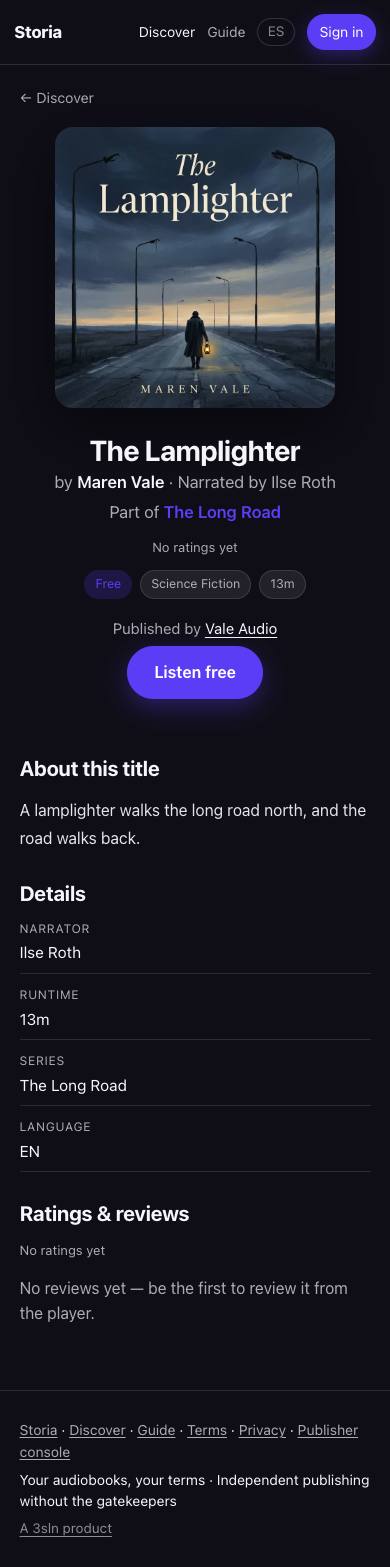
Your title’s own page

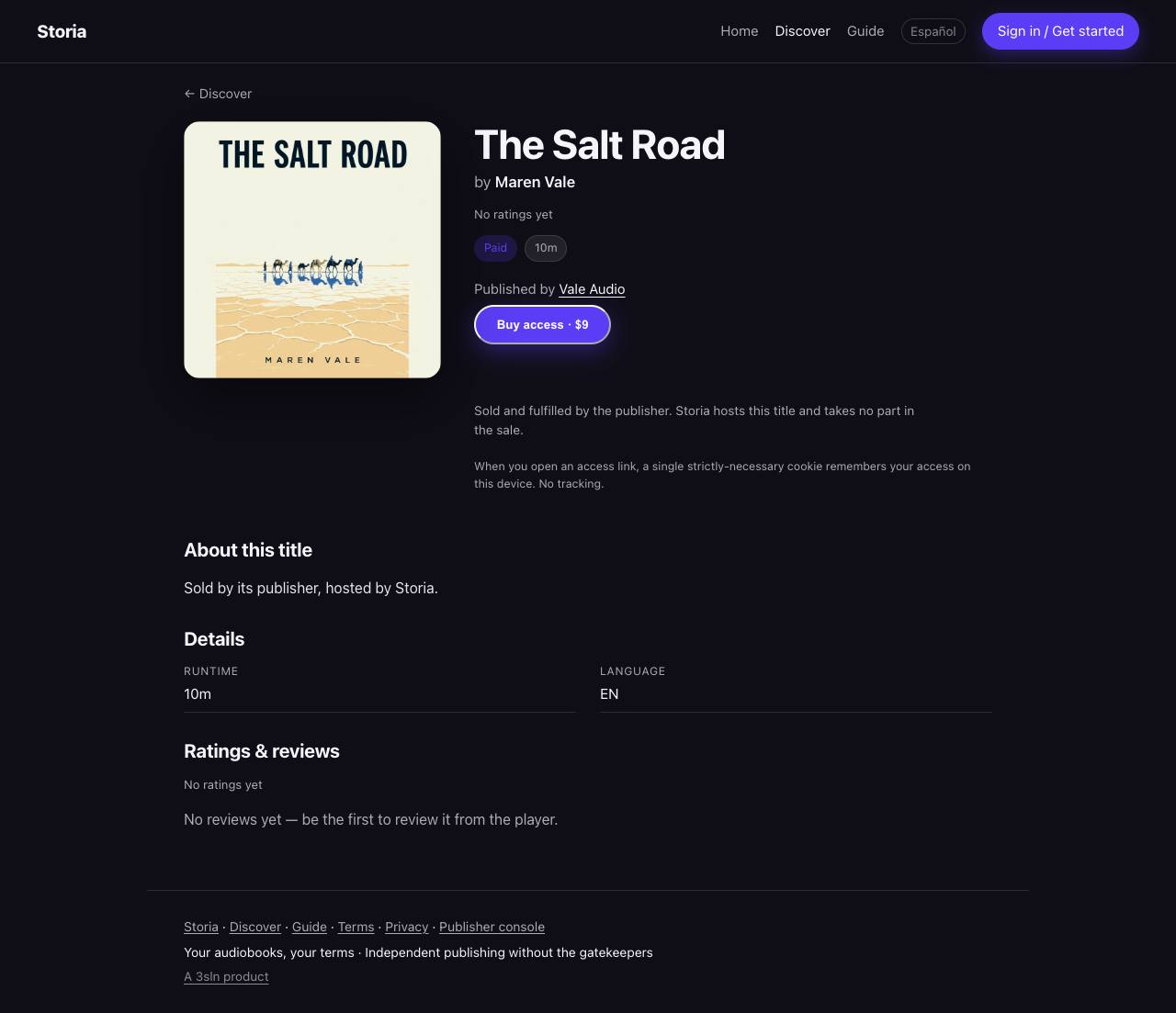
A real page at a real address, in your colours, with everything a shopper weighs up — the sample, the length, the narrator, the reviews. Paste the link into a message or a post and it unfurls with the cover and the description attached.
Your title’s own page

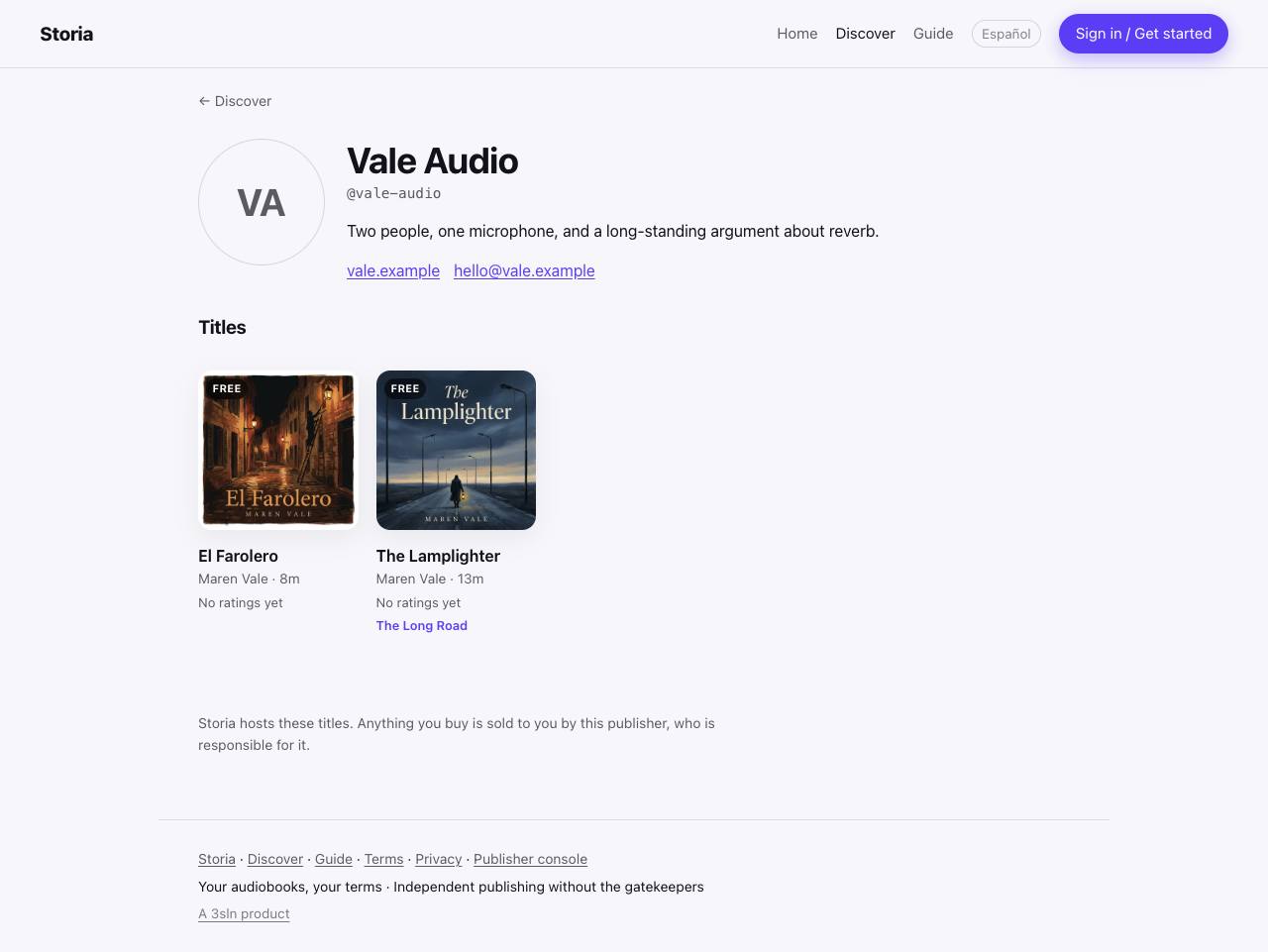
And a page about you

Your titles, your bio and how to reach you, at an address you can put on a card. Someone weighing up a purchase can look you up — including from a search engine, before they have decided to trust the link they arrived on.
And a page about you

What your listeners get

An app for your book alone

Not an account in somebody’s library app. Every title gets its own player at its own address, which a listener can install to their home screen — your cover as the icon, your book as the whole app. It keeps playing with the aeroplane mode on.

An app for your book alone

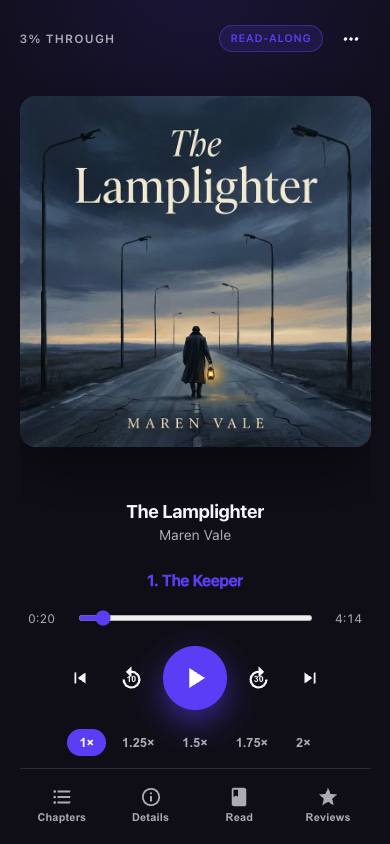
Everything a listener expects

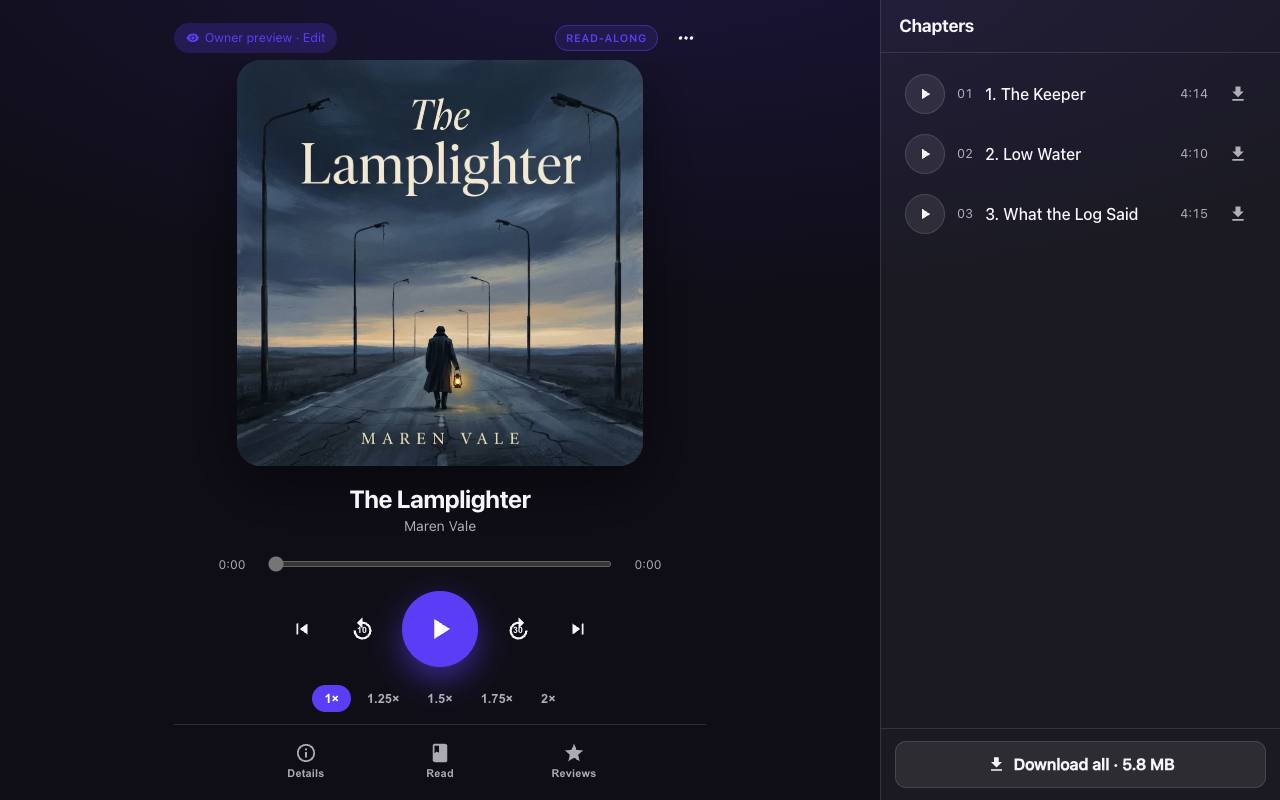
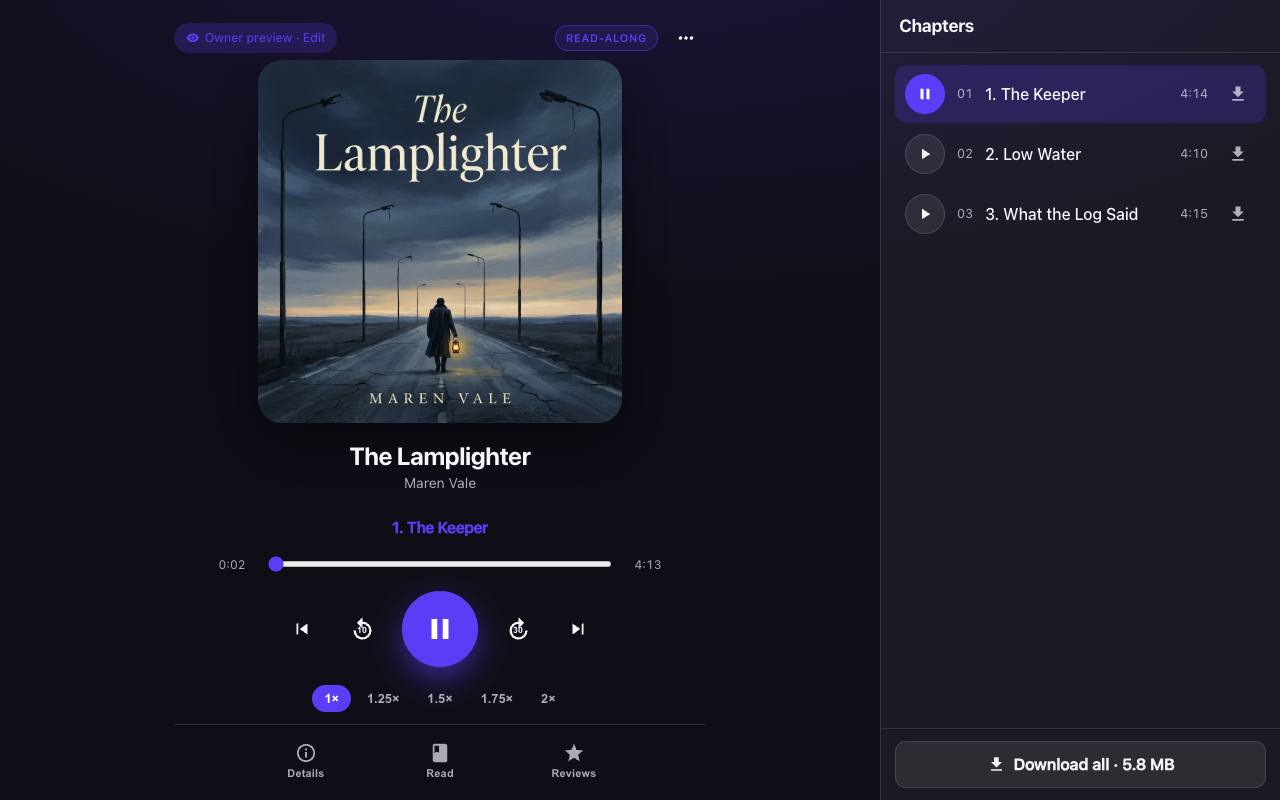
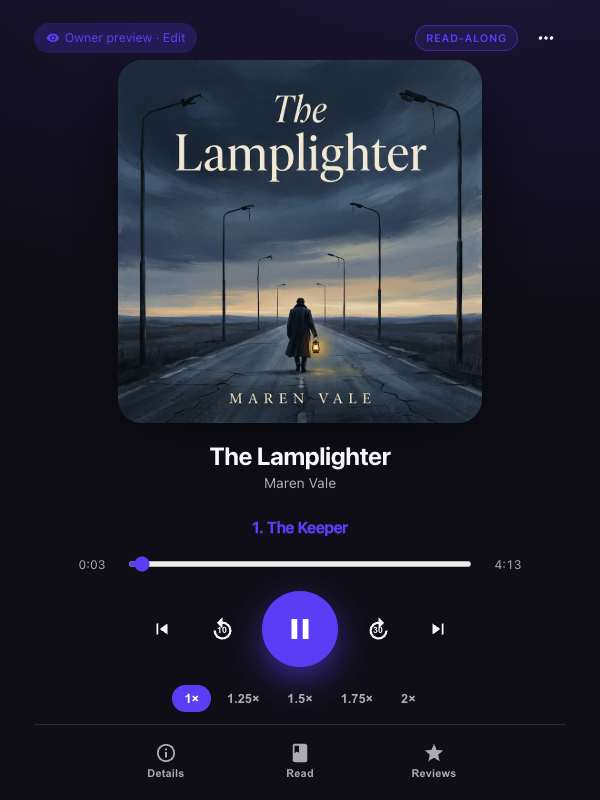
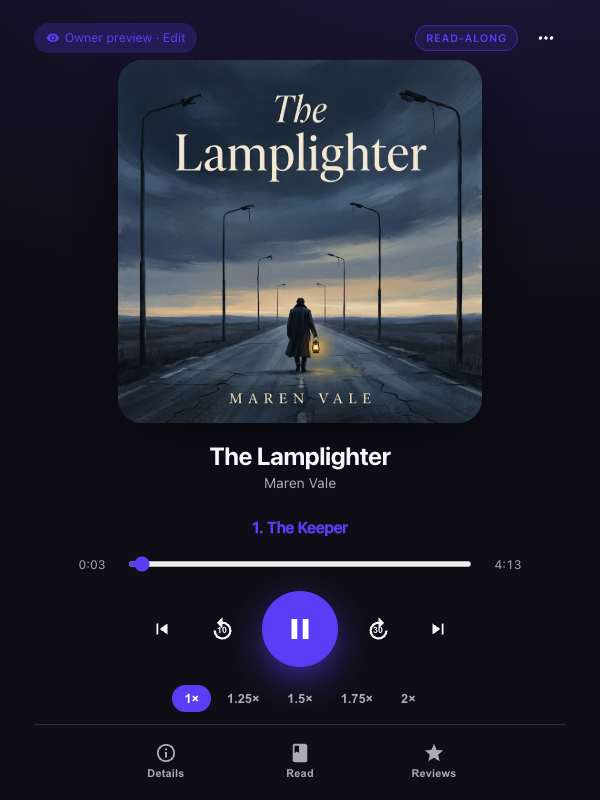
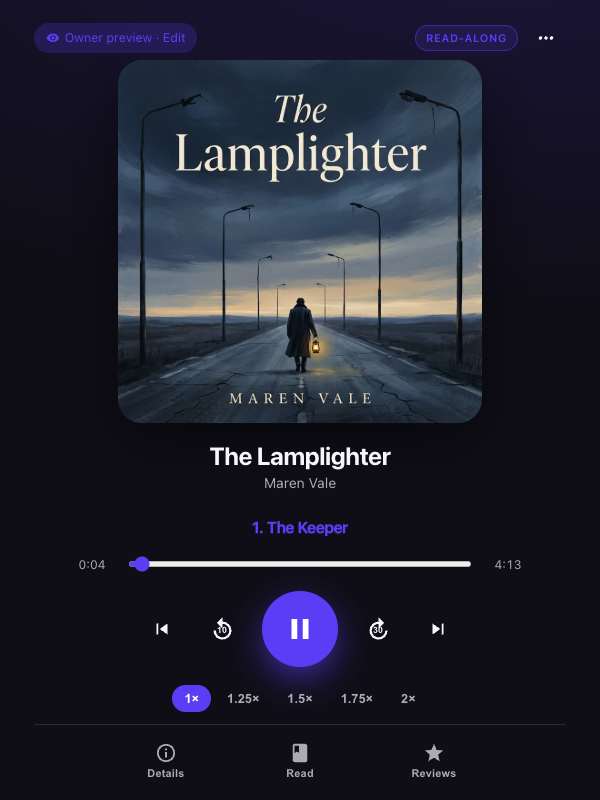
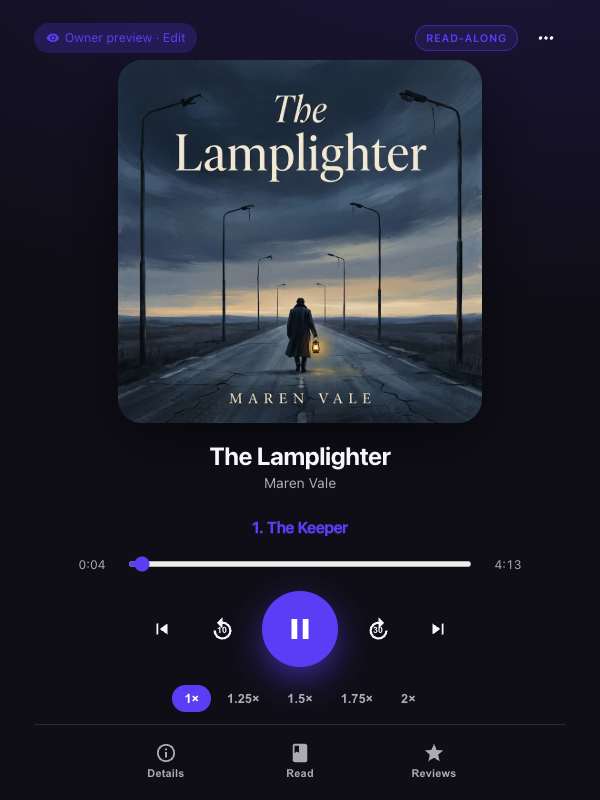
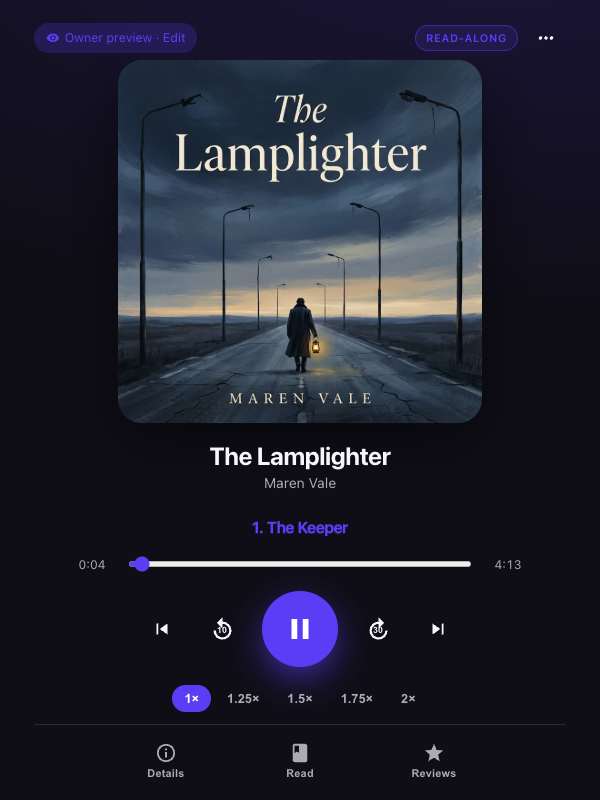
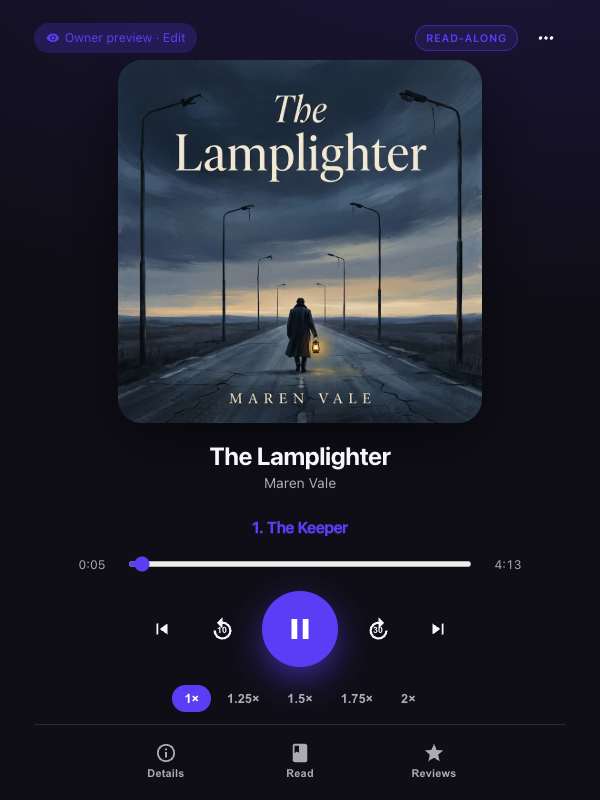
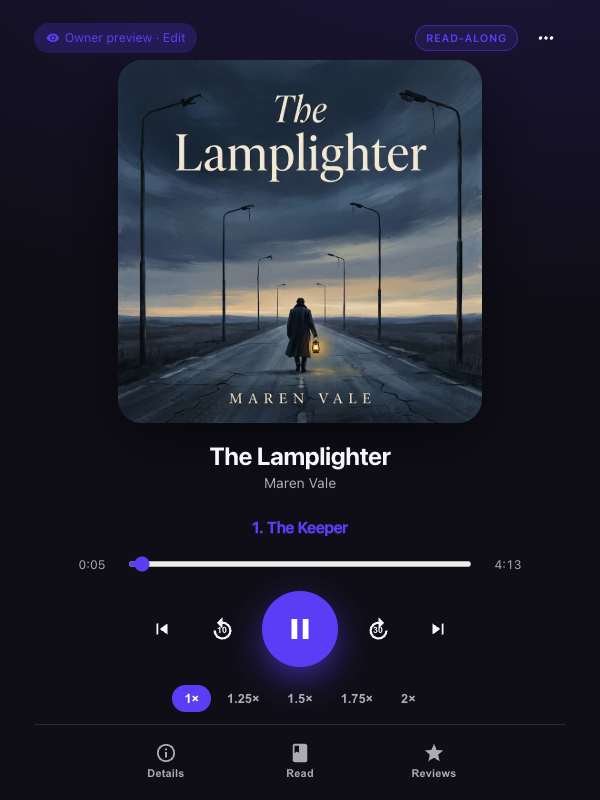
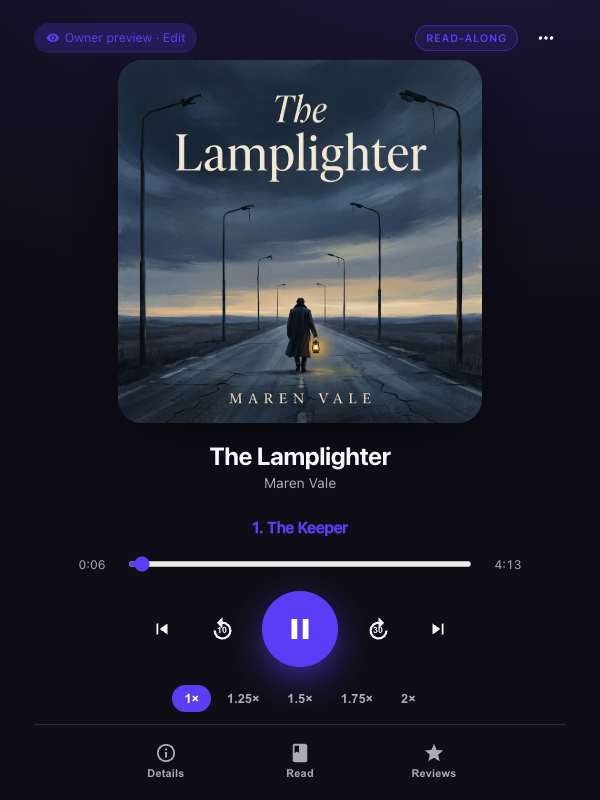
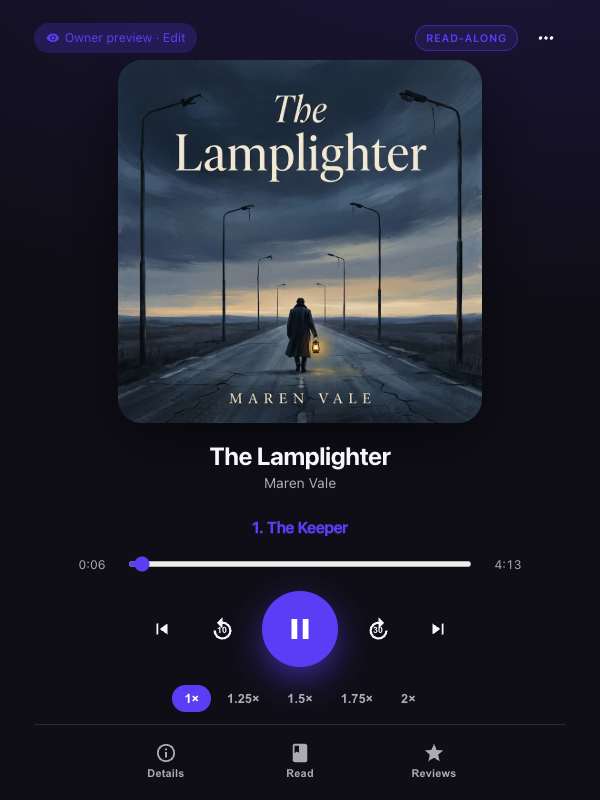
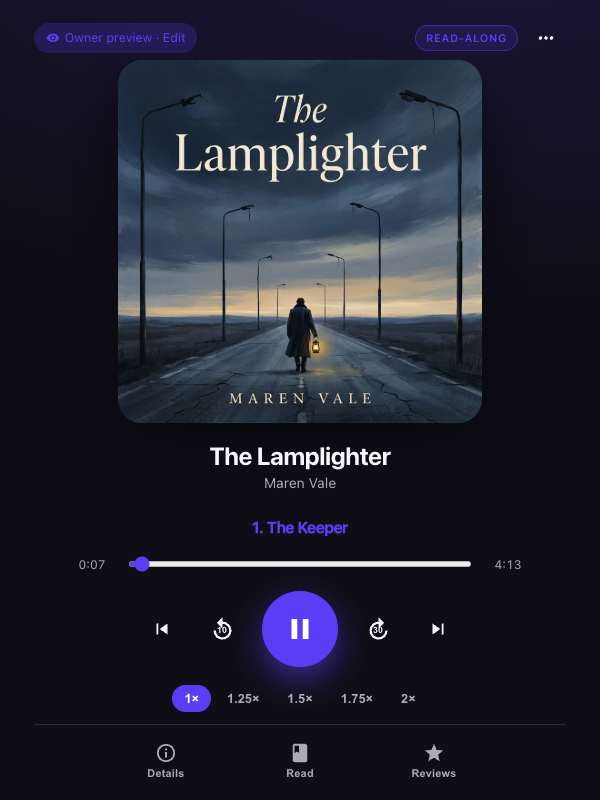
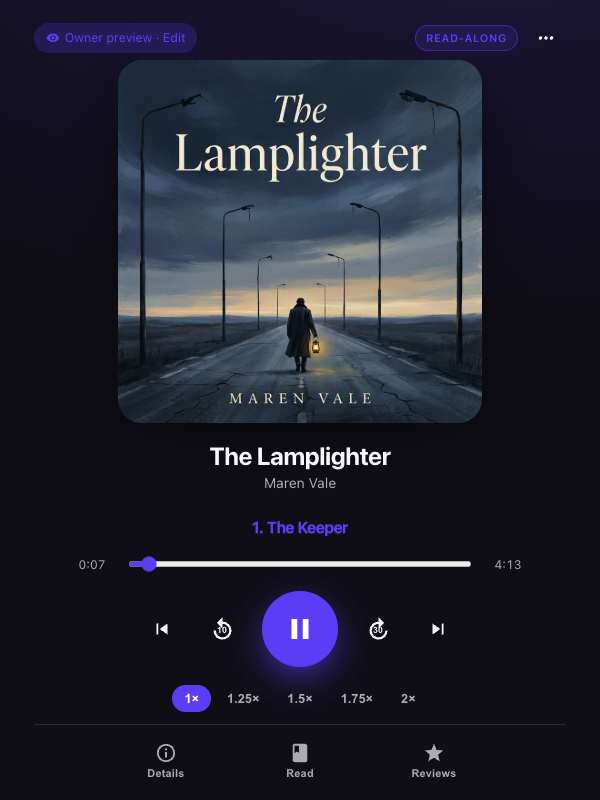
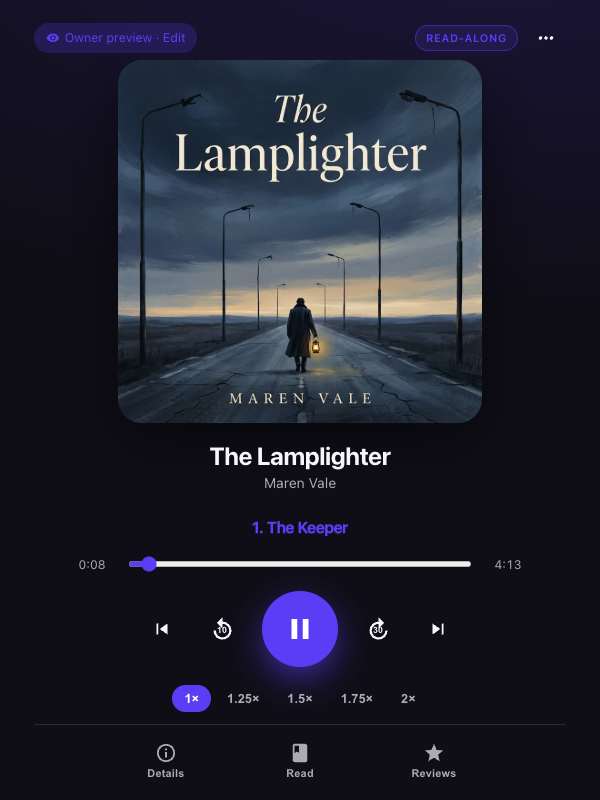
Chapters, speed, skip back thirty, sleep, and a position that survives closing the tab. It shows up on the lock screen and answers the buttons on their headphones.

Everything a listener expects

Playing

The real thing, running. One clock drives the position, the chapter and the lock-screen card — which is why opening the text in a moment does not interrupt any of it.

PlayingPlayingPlayingPlayingPlayingPlayingPlayingPlayingPlayingPlayingPlayingPlayingPlayingPlaying

Read it as well as hear it

The same purchase opens the book. Someone can listen on the commute and pick up reading at lunch from exactly where the narrator left them — one position, one place, no second app to buy.

Read it as well as hear it

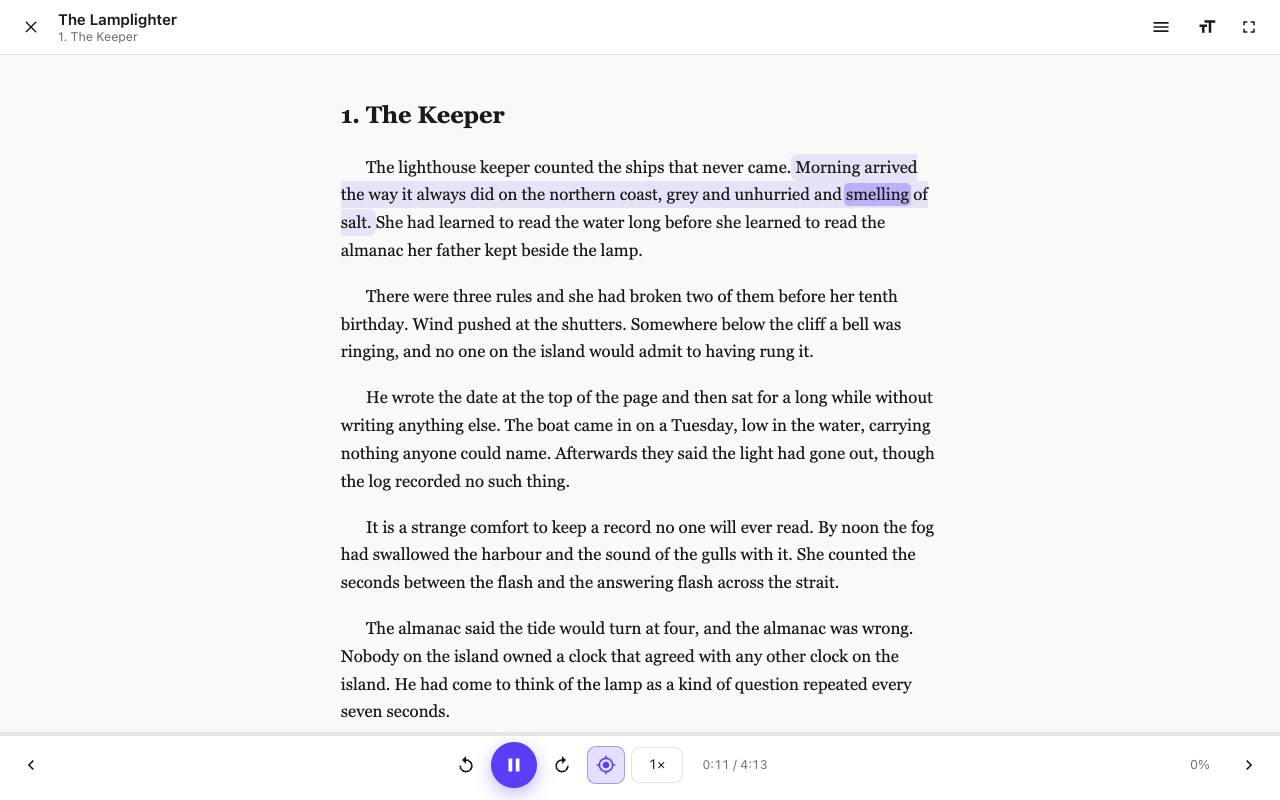
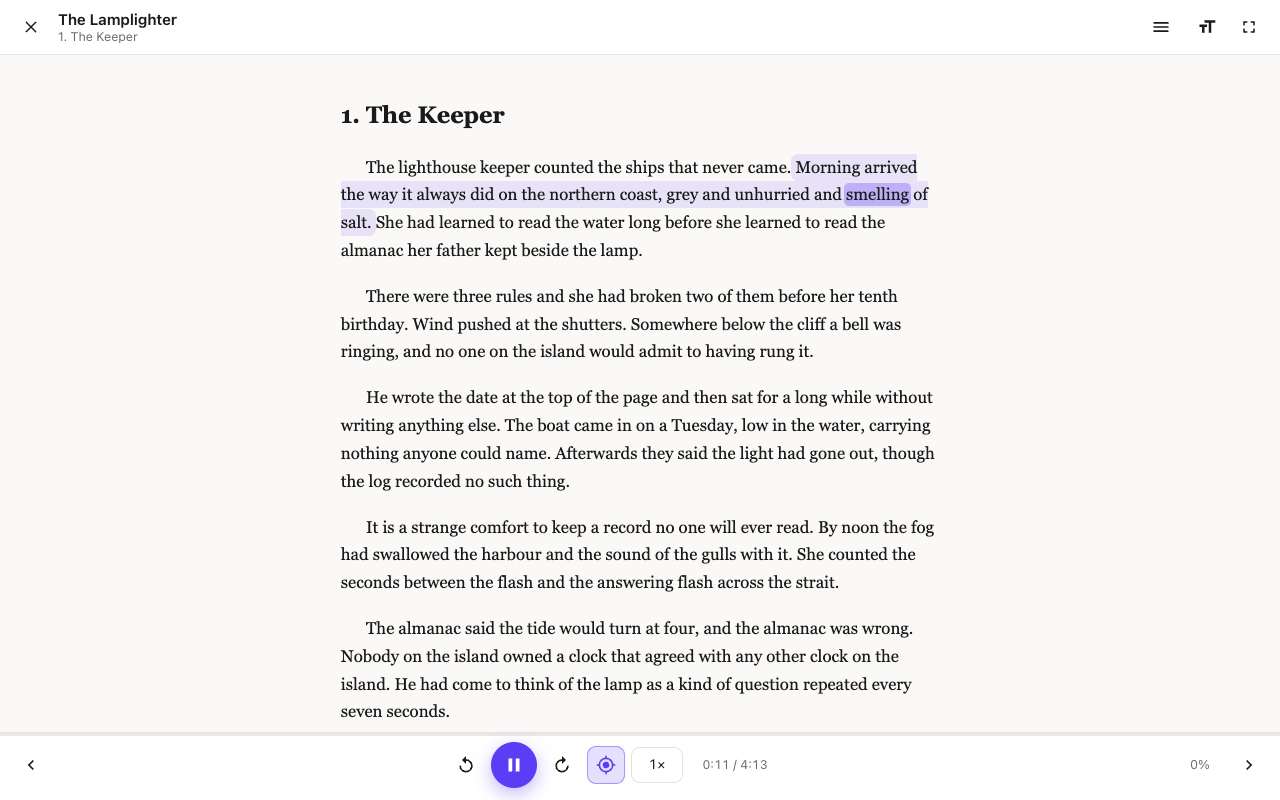
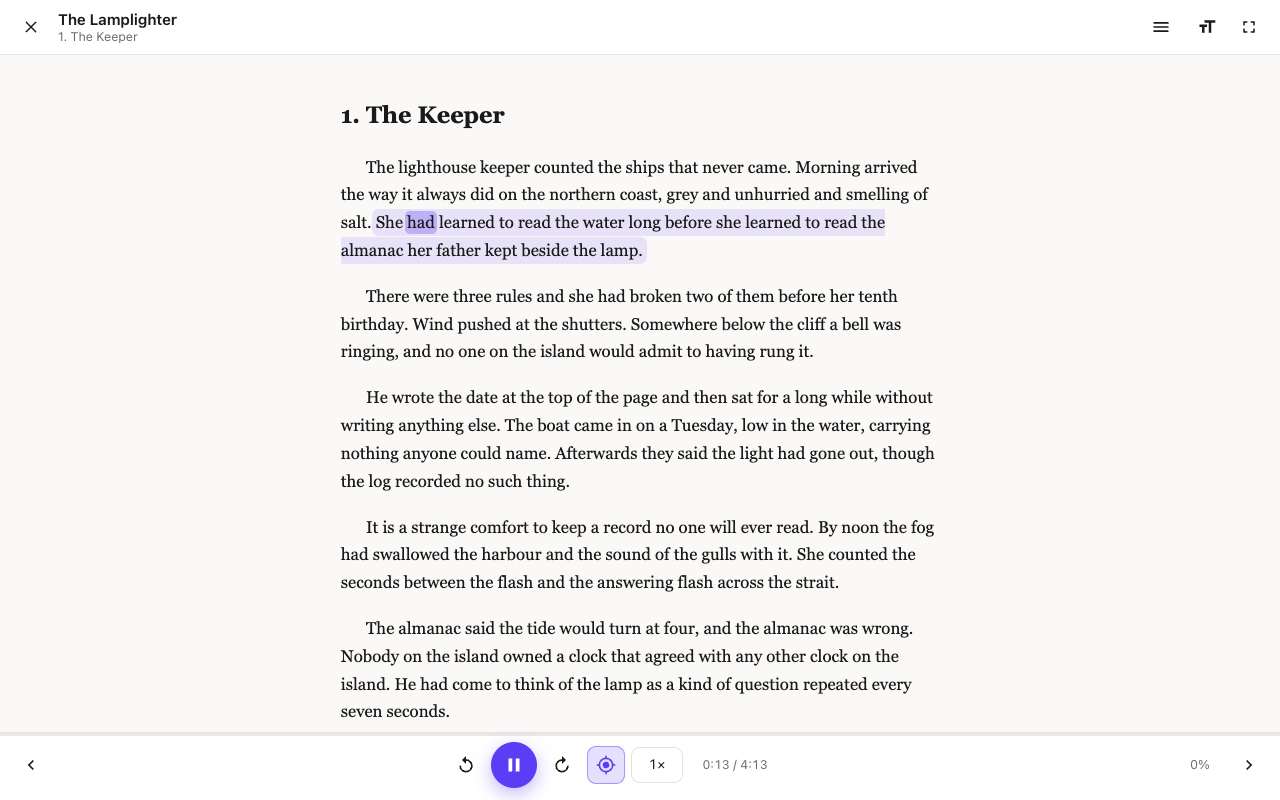
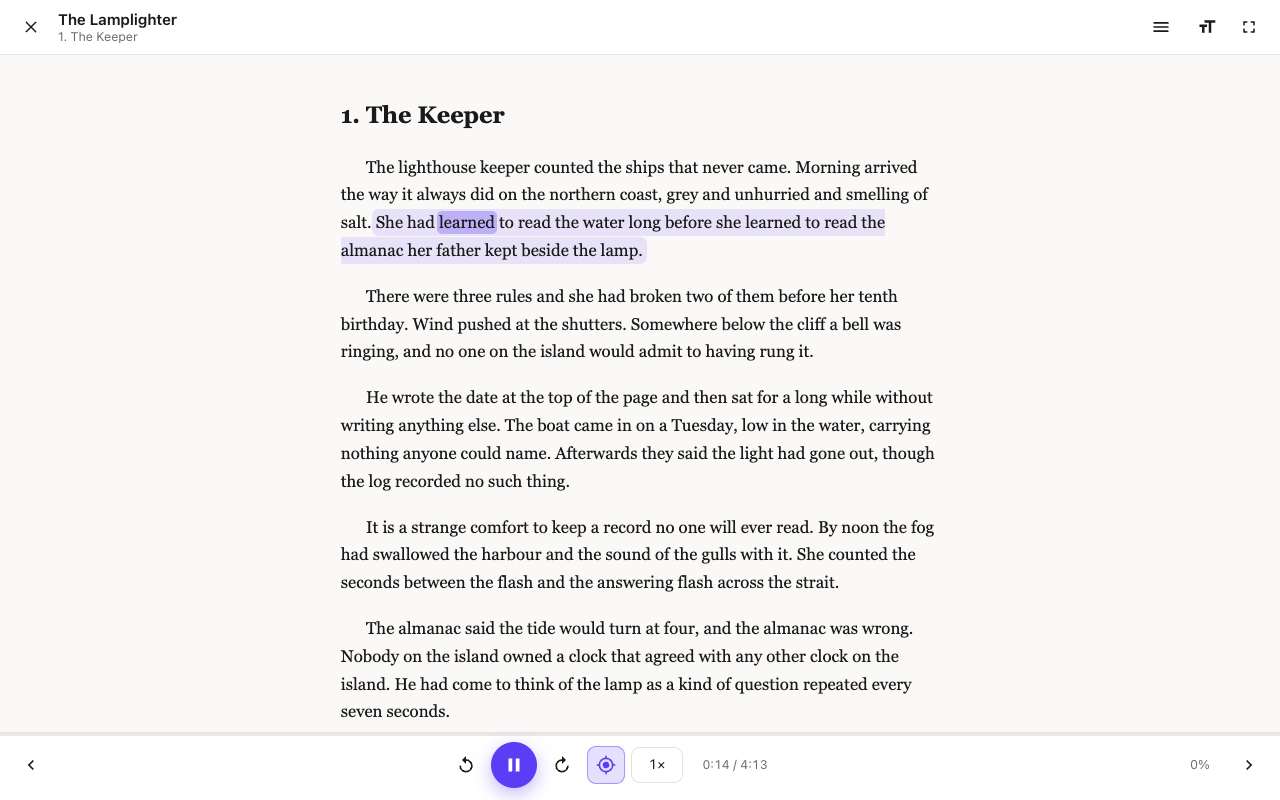
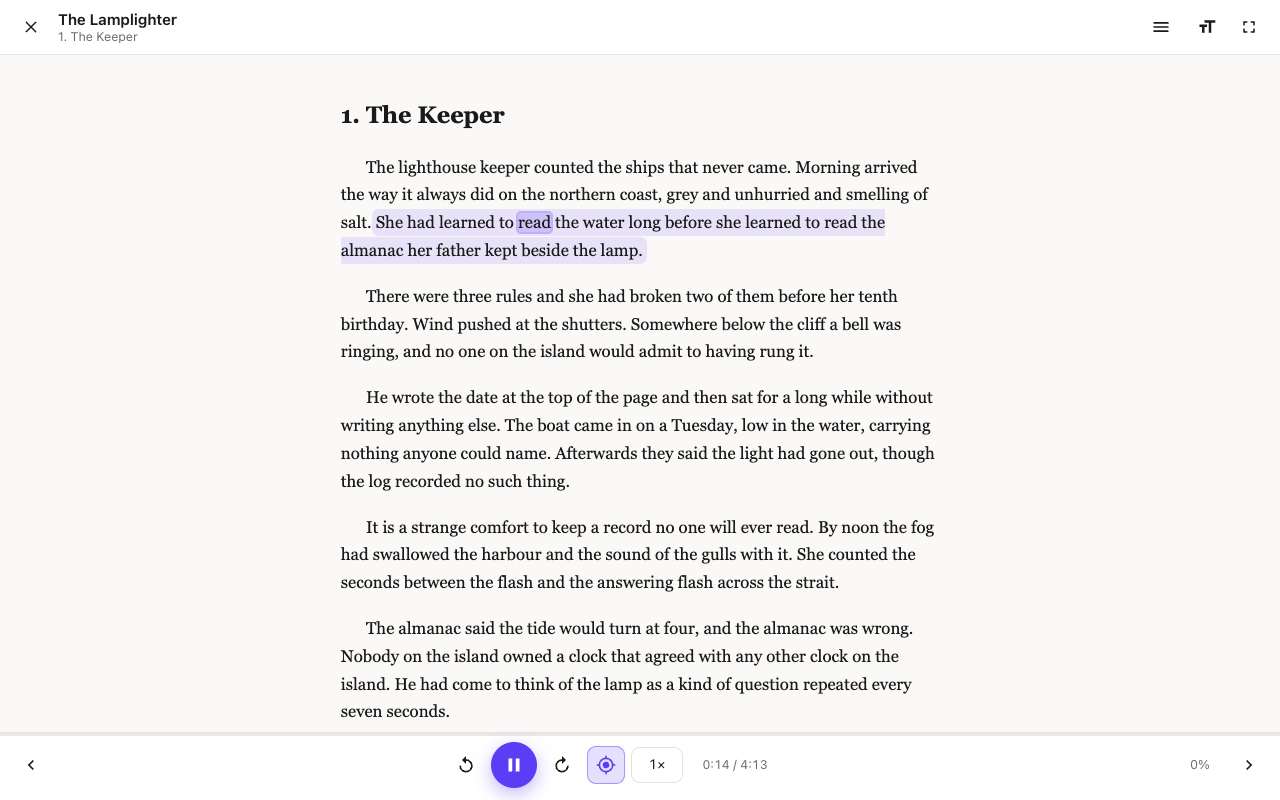
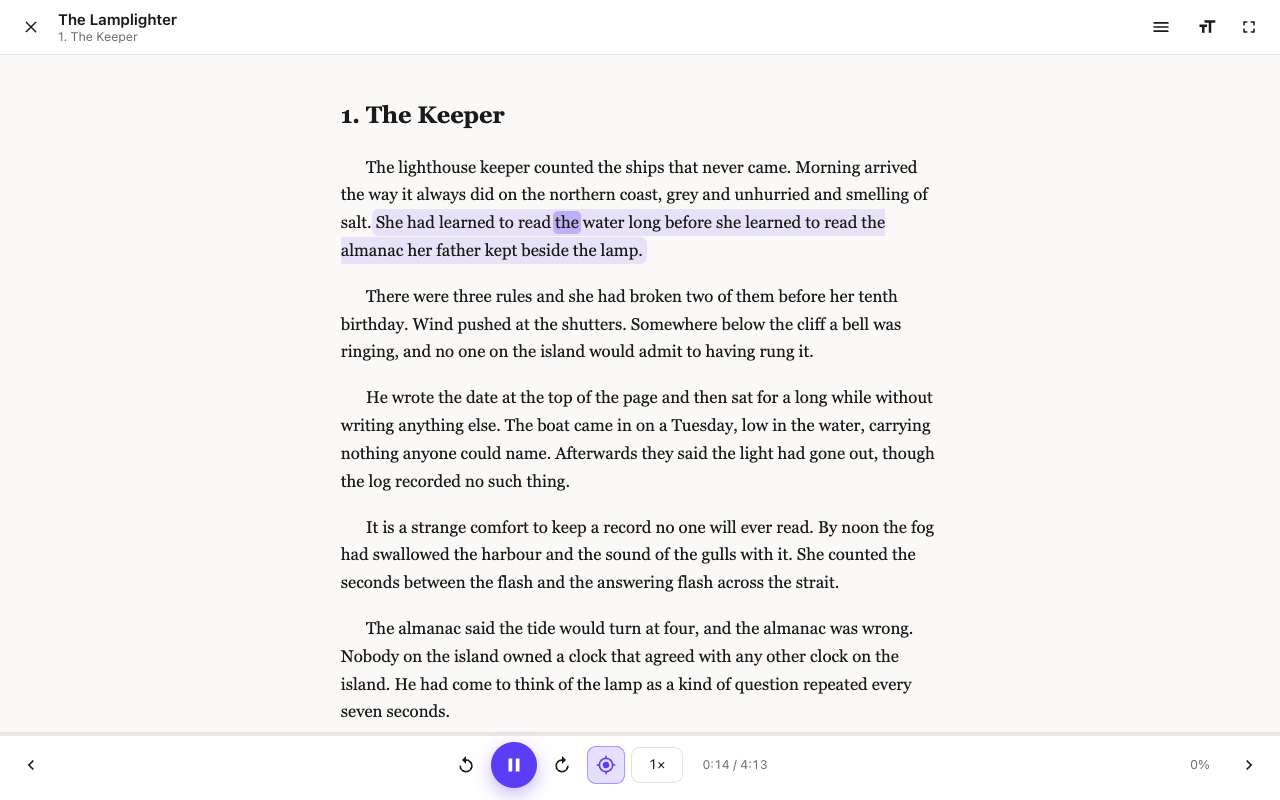
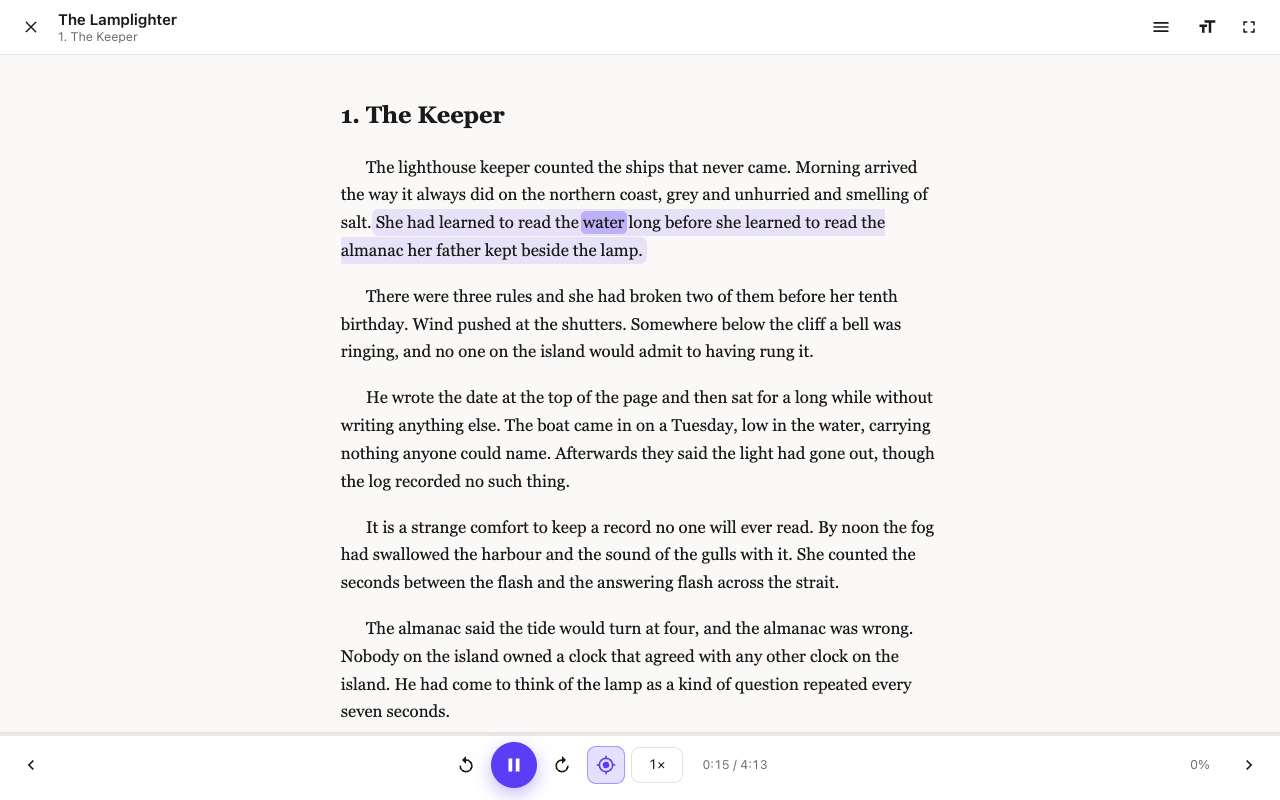
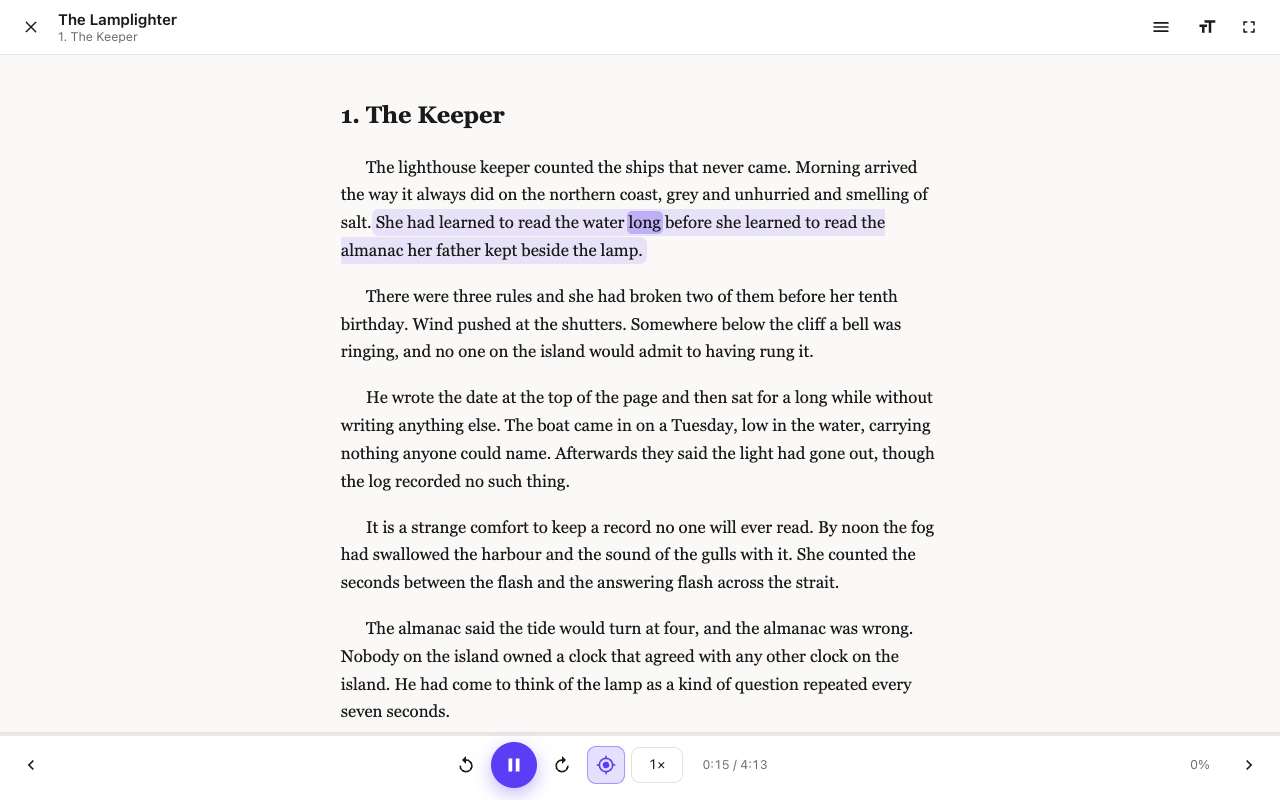
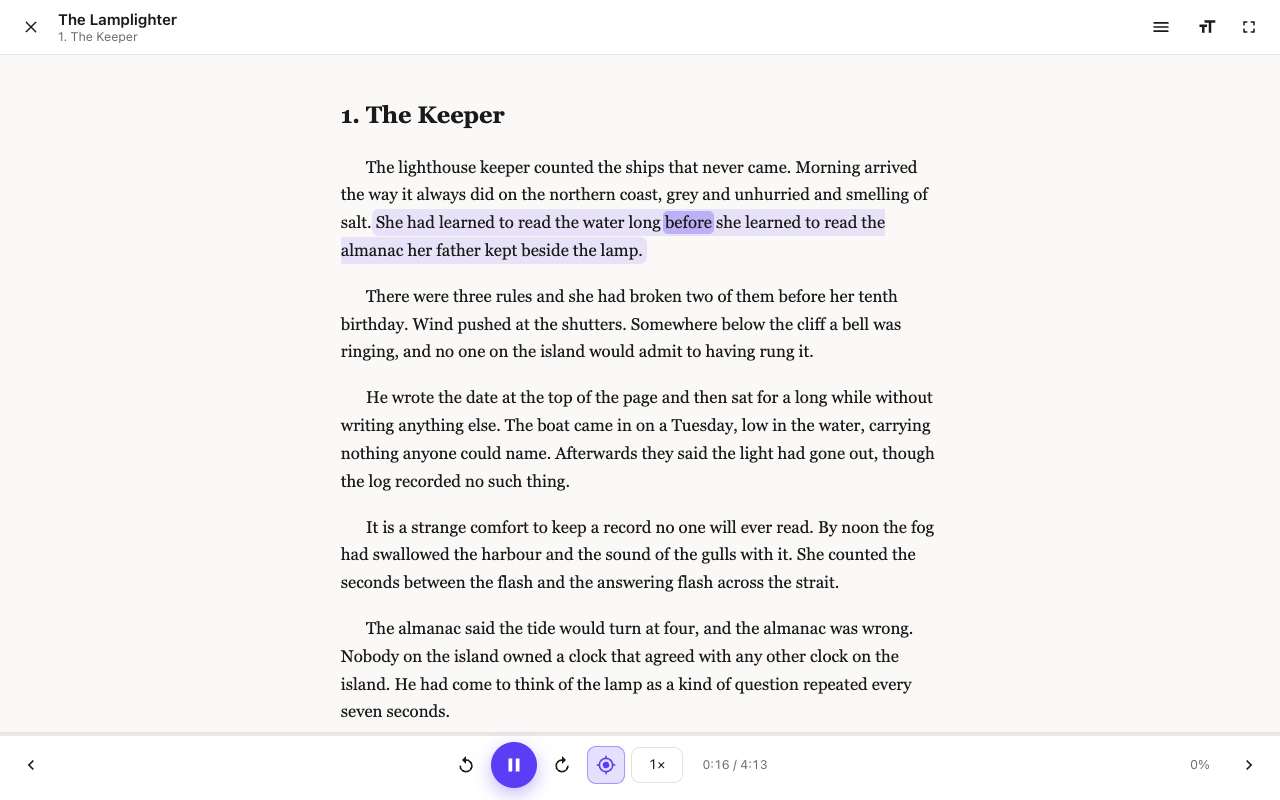
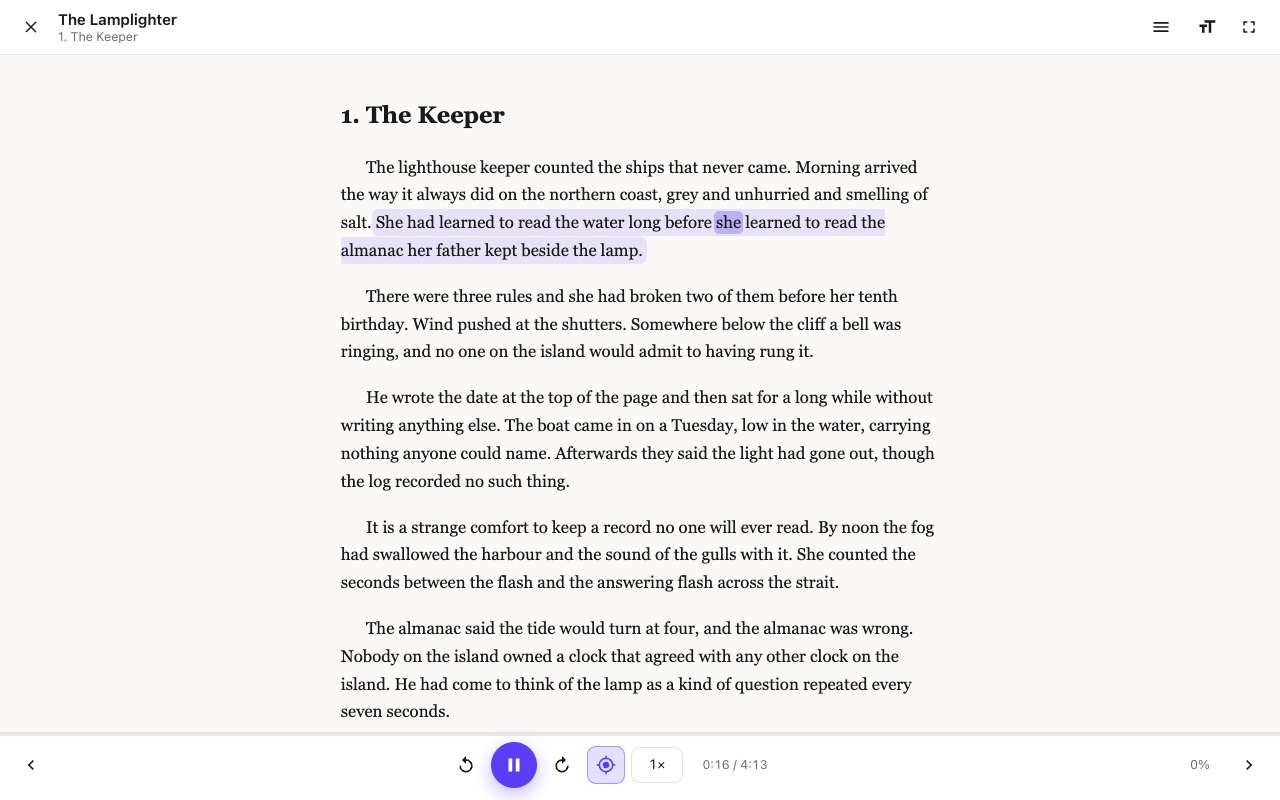
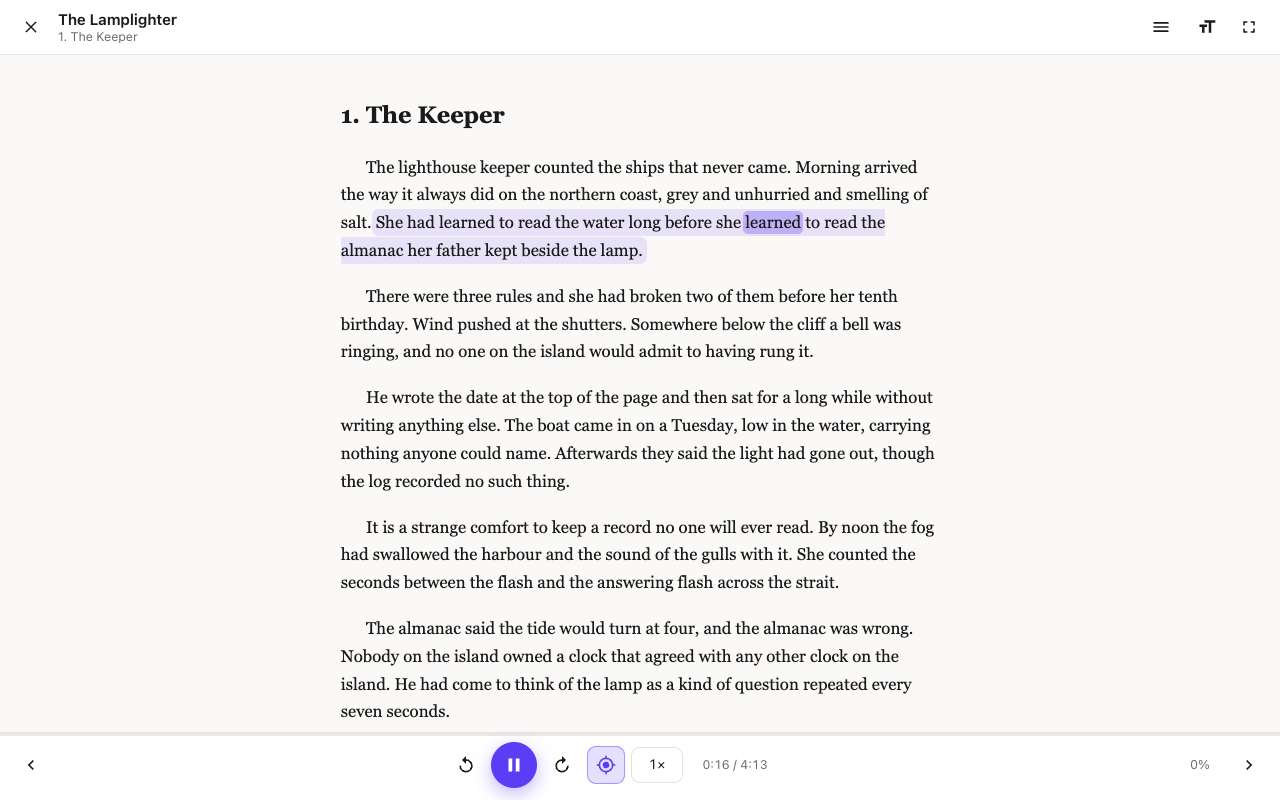
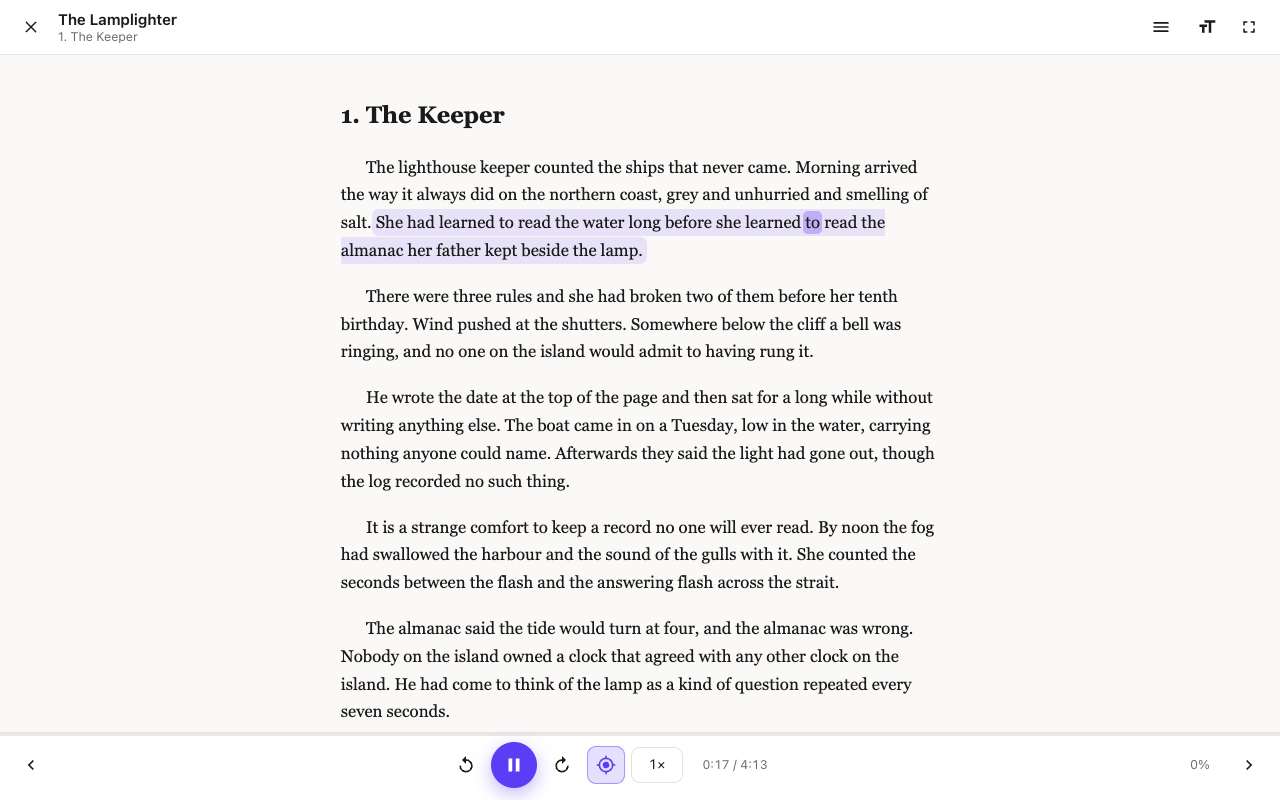
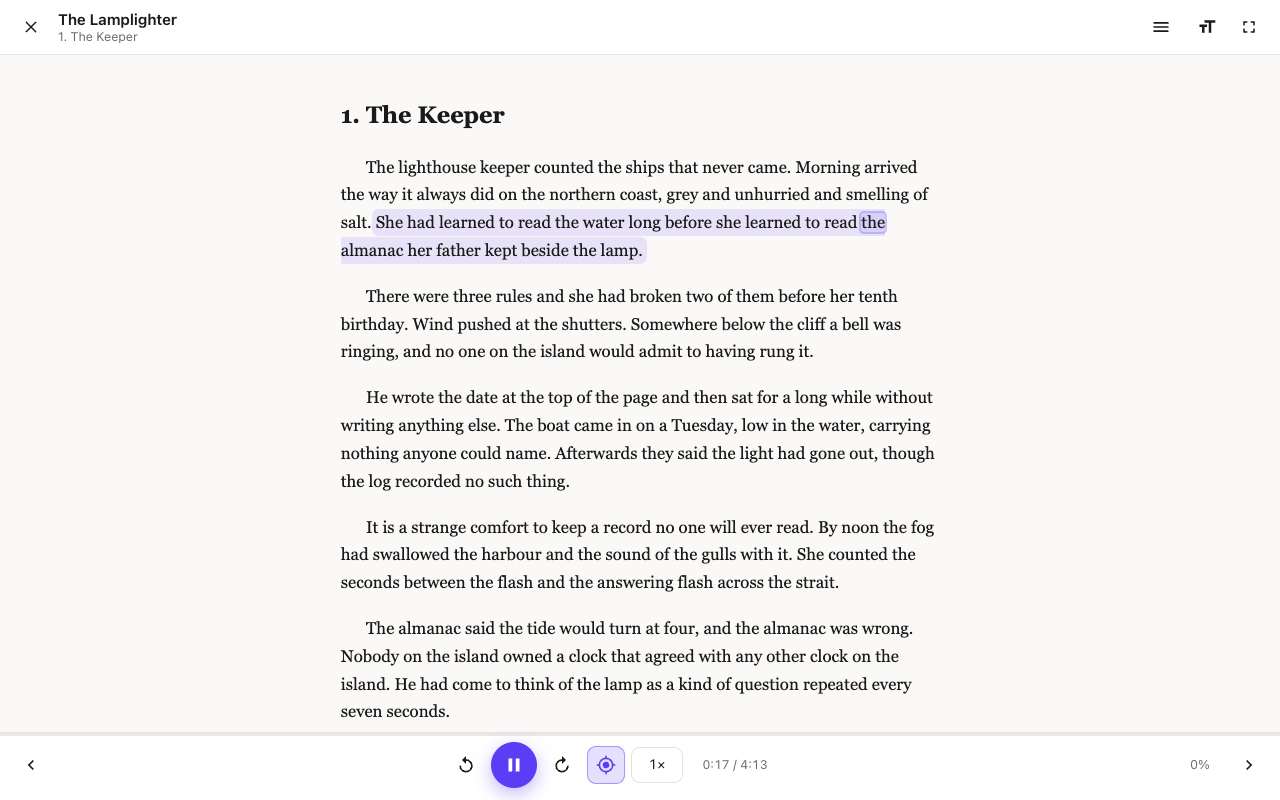
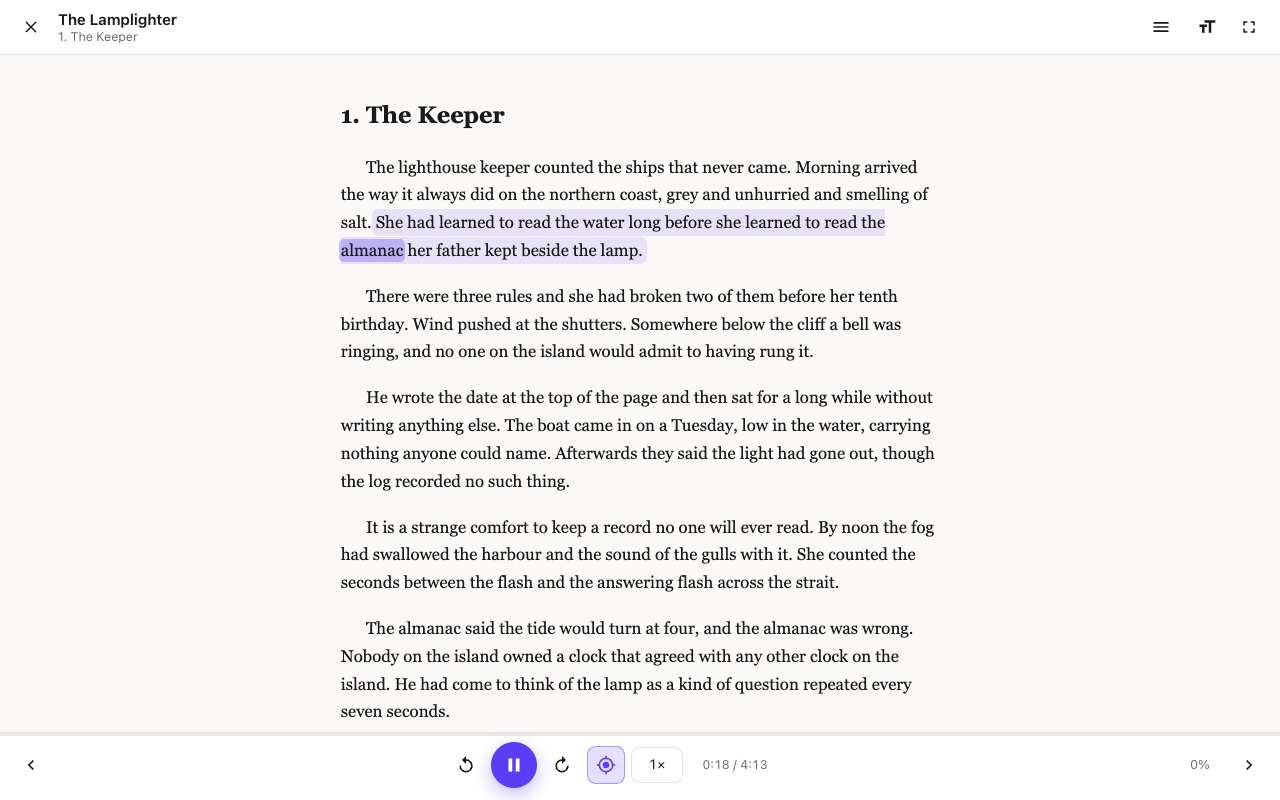
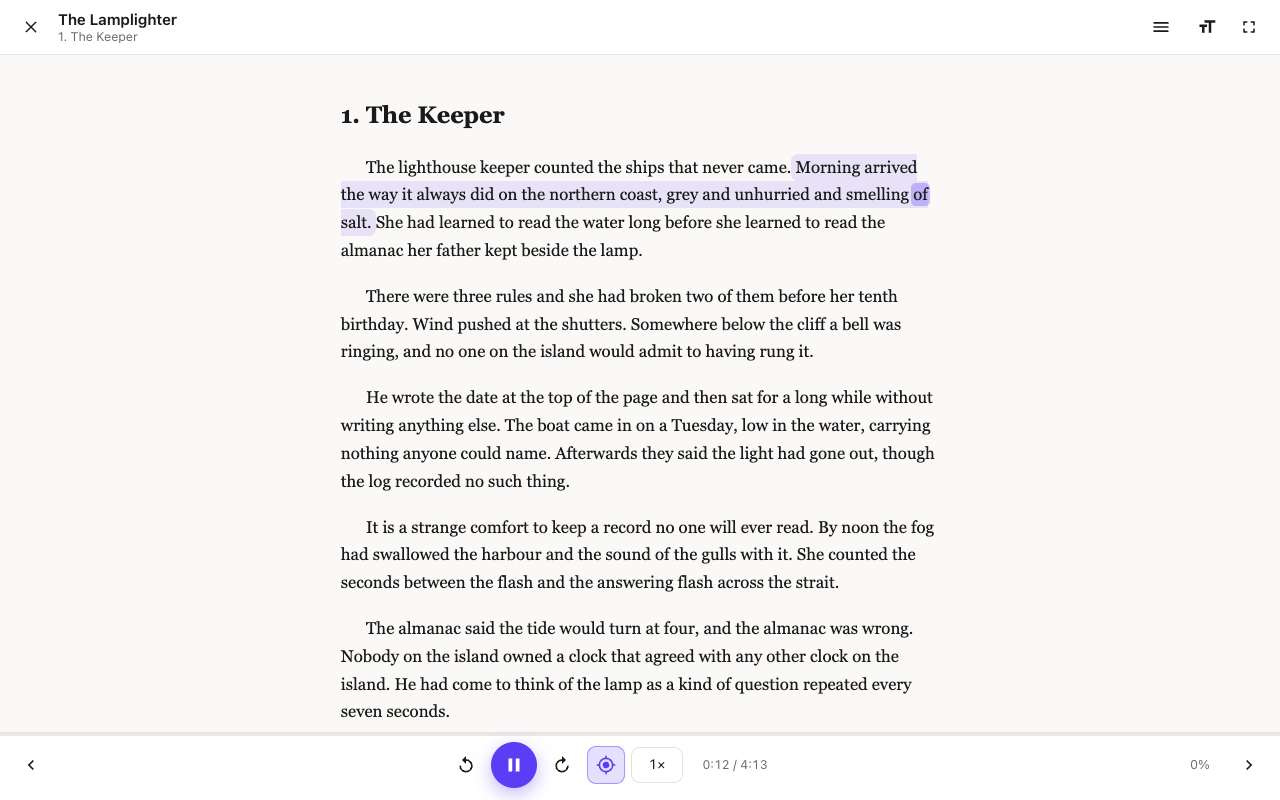
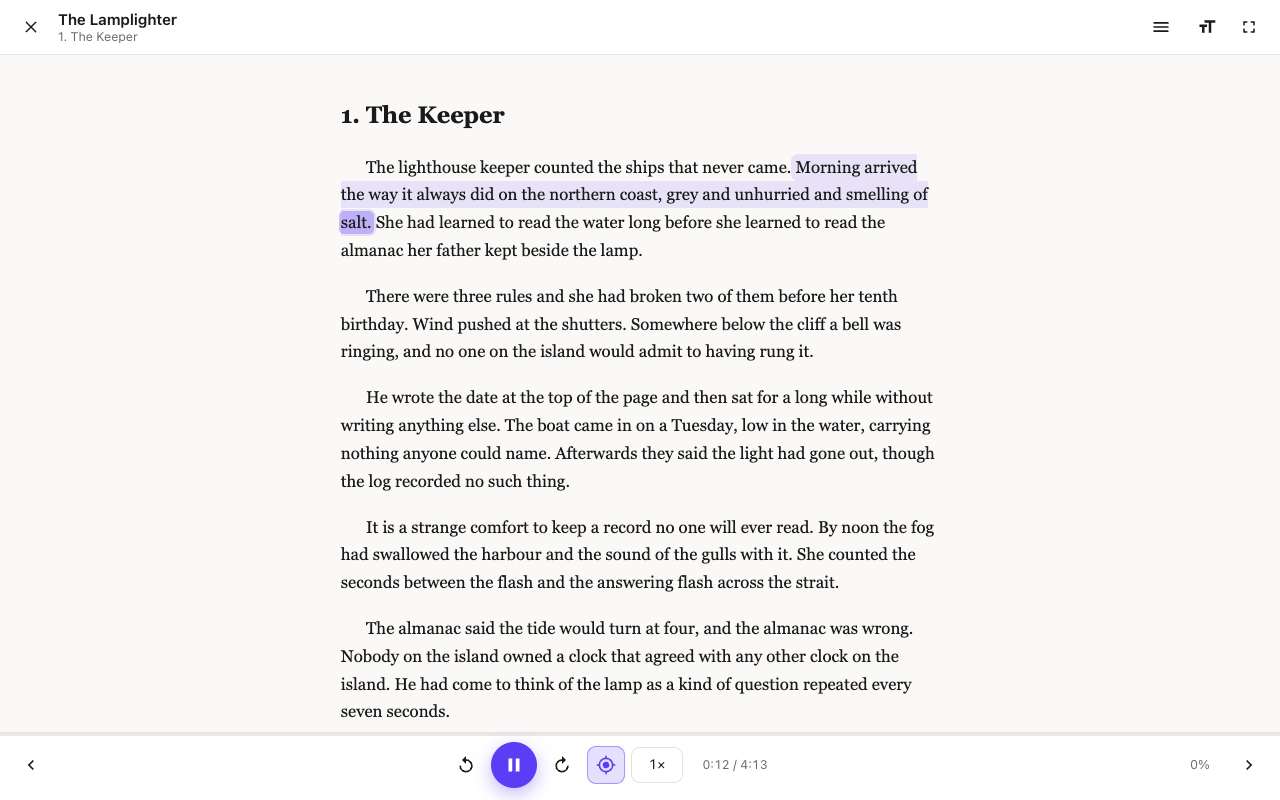
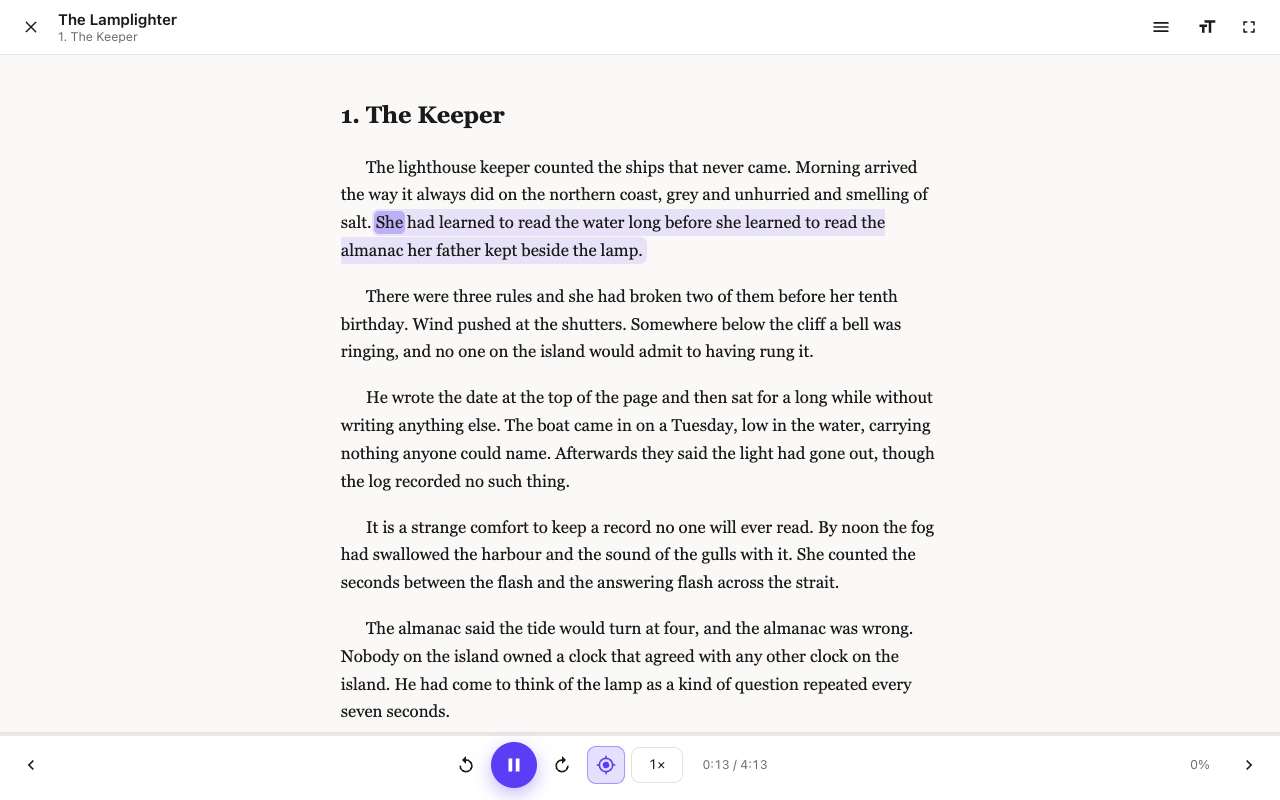
The text follows the voice, word by word

Read-along, running against the real narration. It is the feature people learn to read with, the one that makes a second language possible, and the one that keeps a reader with a long book. If your audiobook already carries its own timings, Storia uses them; if it does not, it can work them out.

The text follows the voice, word by wordThe text follows the voice, word by wordThe text follows the voice, word by wordThe text follows the voice, word by wordThe text follows the voice, word by wordThe text follows the voice, word by wordThe text follows the voice, word by wordThe text follows the voice, word by wordThe text follows the voice, word by wordThe text follows the voice, word by wordThe text follows the voice, word by wordThe text follows the voice, word by wordThe text follows the voice, word by wordThe text follows the voice, word by wordThe text follows the voice, word by wordThe text follows the voice, word by word

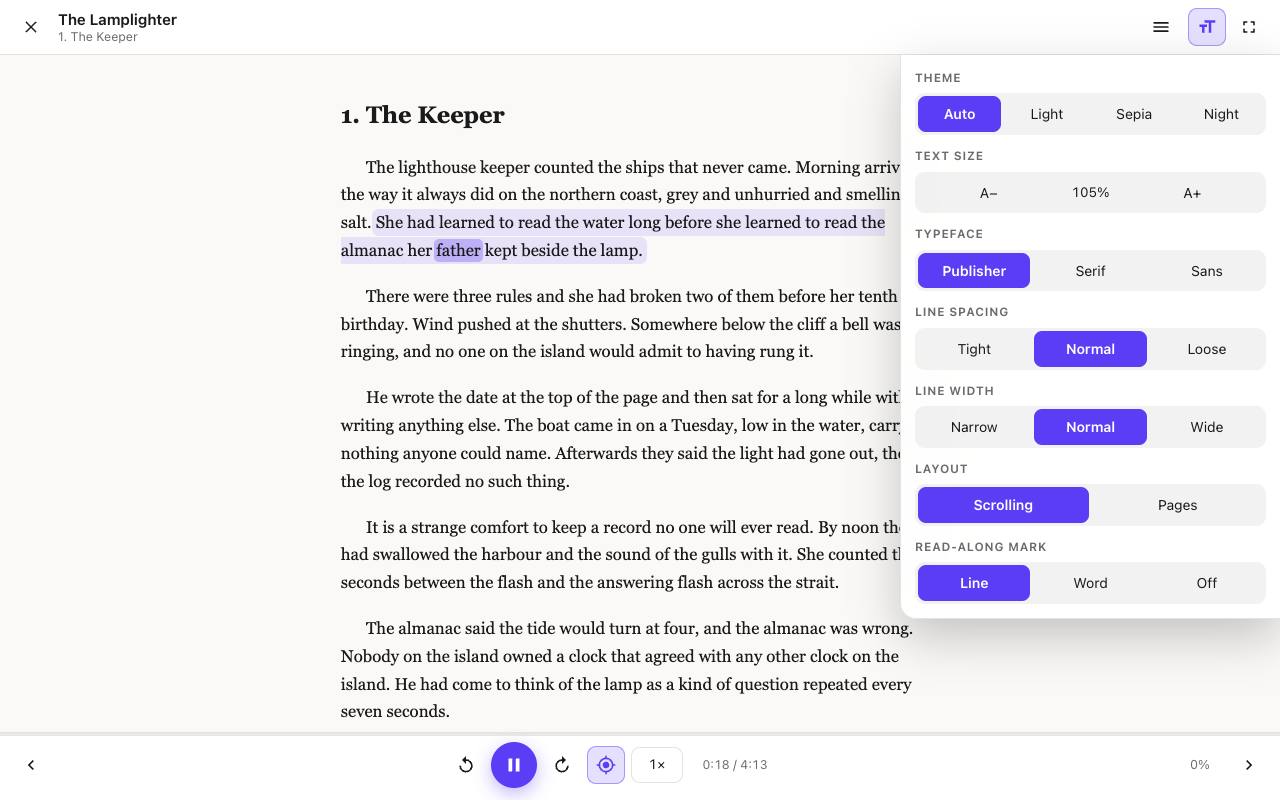
Comfortable enough to stay in

Type size, line width, theme, paged or scrolling, and how much the read-along marks — a word, a line, or nothing at all. Set once, remembered after.

Comfortable enough to stay in

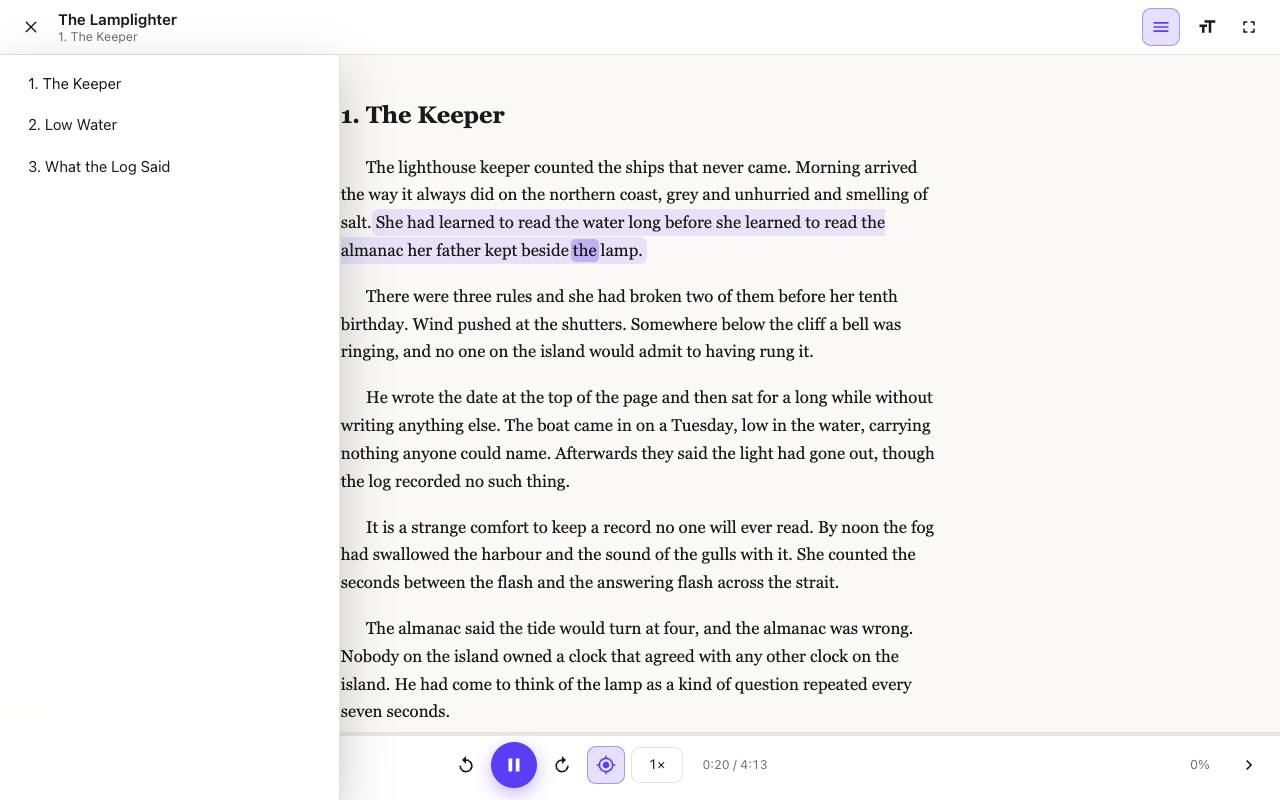
Jump anywhere

Your table of contents, moving the audio and the text together.

Jump anywhere

What readers thought

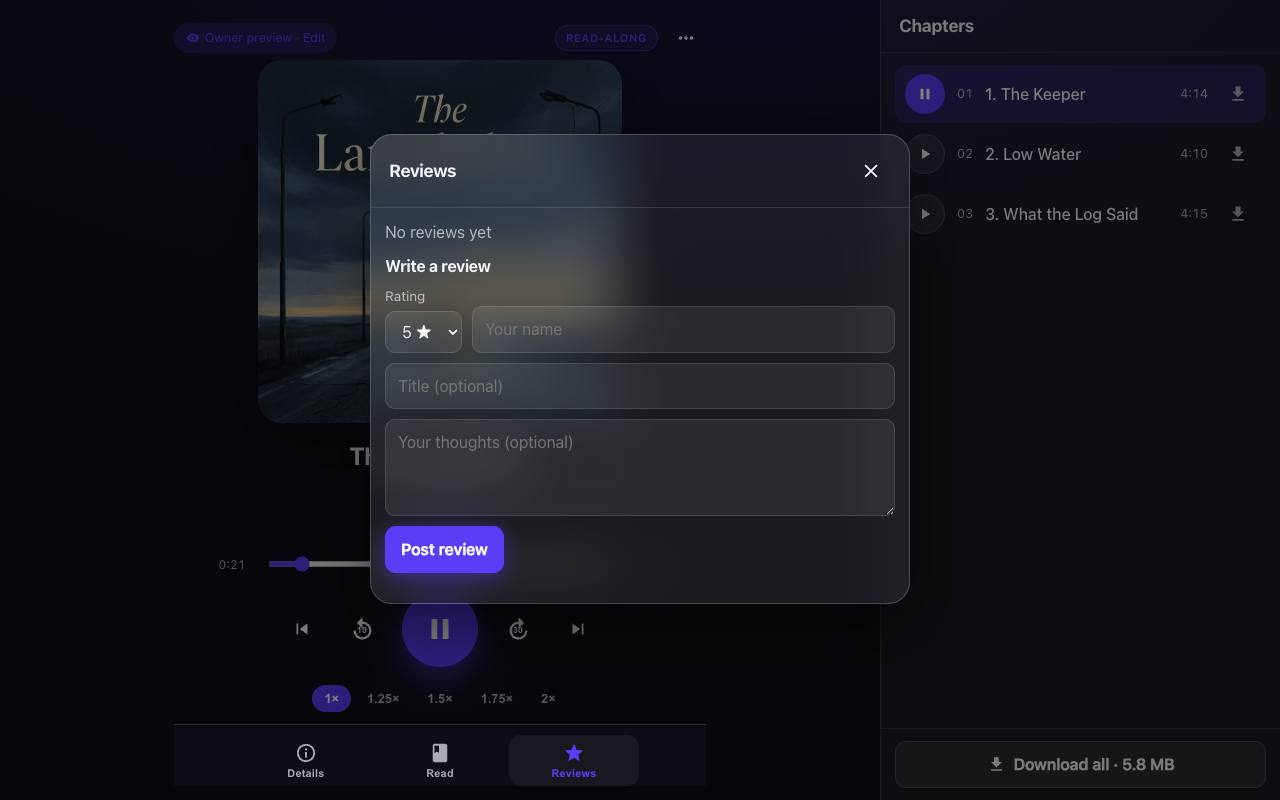
Ratings and reviews on the title itself, from the people who actually have it.

What readers thought

When a title is for sale

A paywall that is honest about it

Someone without a copy gets the cover, the description and the free sample — not a broken player and not a dead end. What they need to decide is on the page.

A paywall that is honest about it

They know they are buying from you

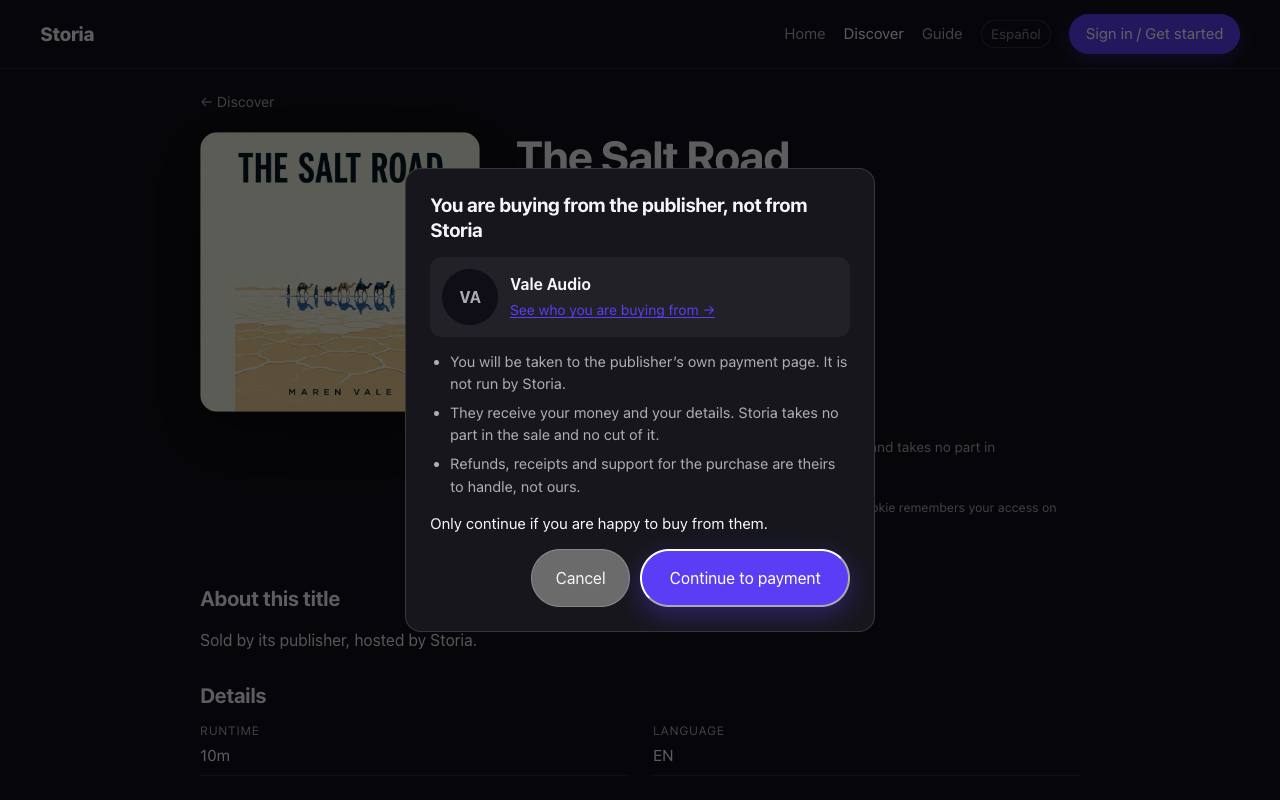
Every route to a payment page passes through this first, and it says plainly that the sale is the publisher’s: you receive the money, you handle the refund, Storia takes no part and no cut. Buyers trust a page that tells them who they are paying — and it is the truth, so it costs nothing to say.

They know they are buying from you

Paid, and listening

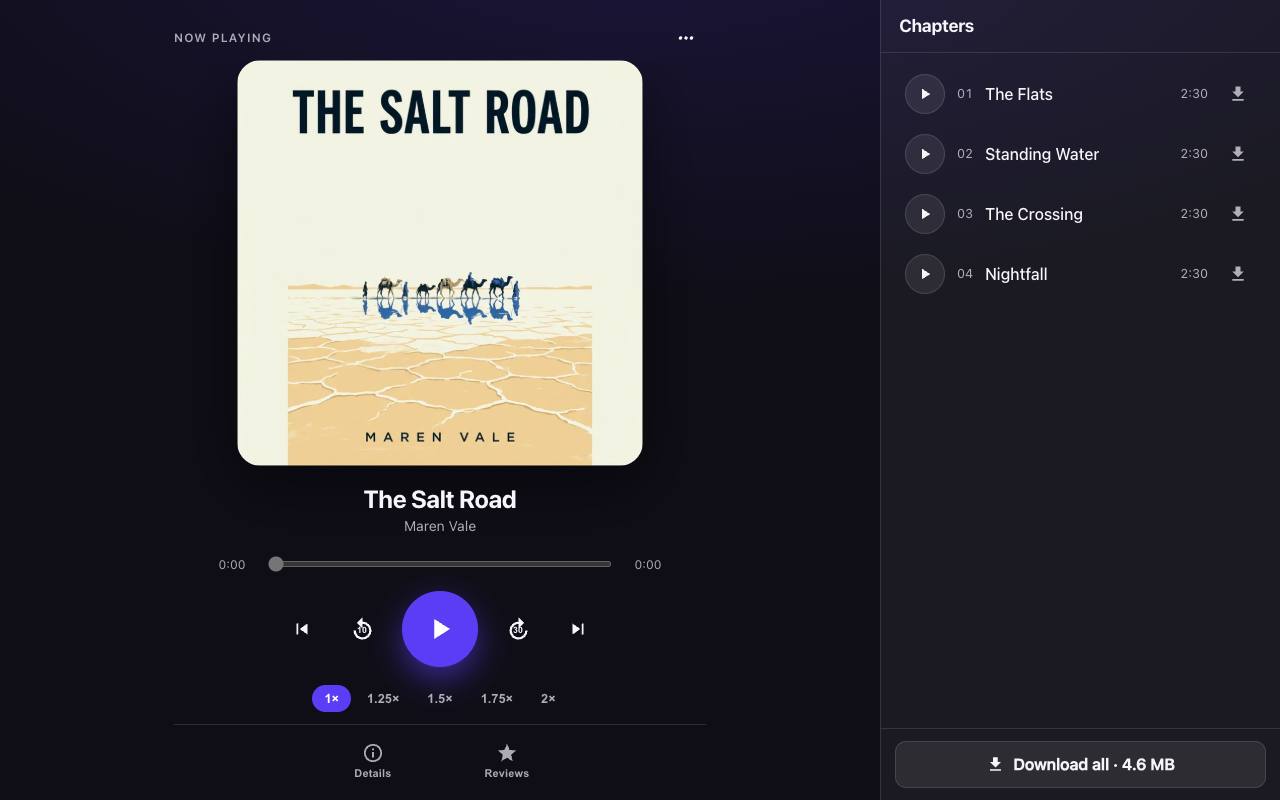
Payment goes through and their copy opens — no account to create, no library to log into, no code to type in. The link is theirs and it works on the device they are holding.

Paid, and listening

On a phone

The catalogue

The same catalogue, on the device most people are holding when they find you.

The catalogue

Your title

Cover, sample and price where a thumb can reach them.

Your title

The player

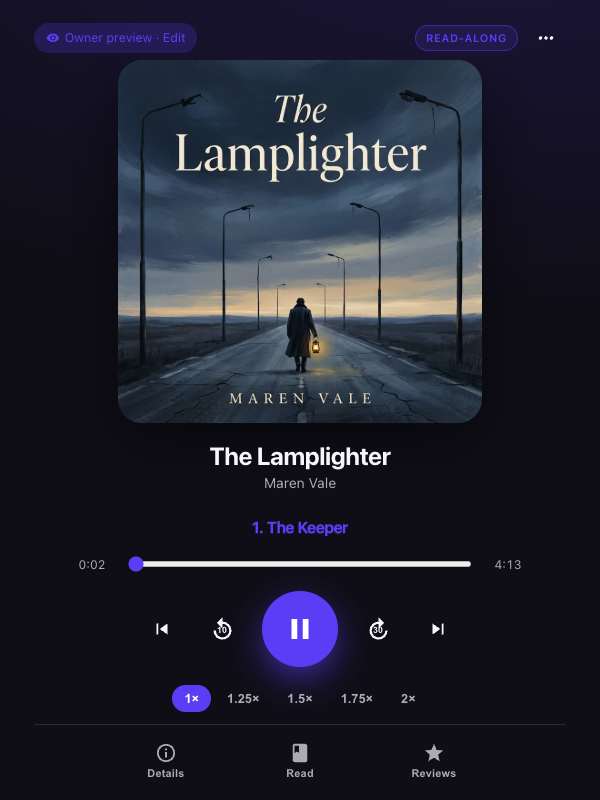
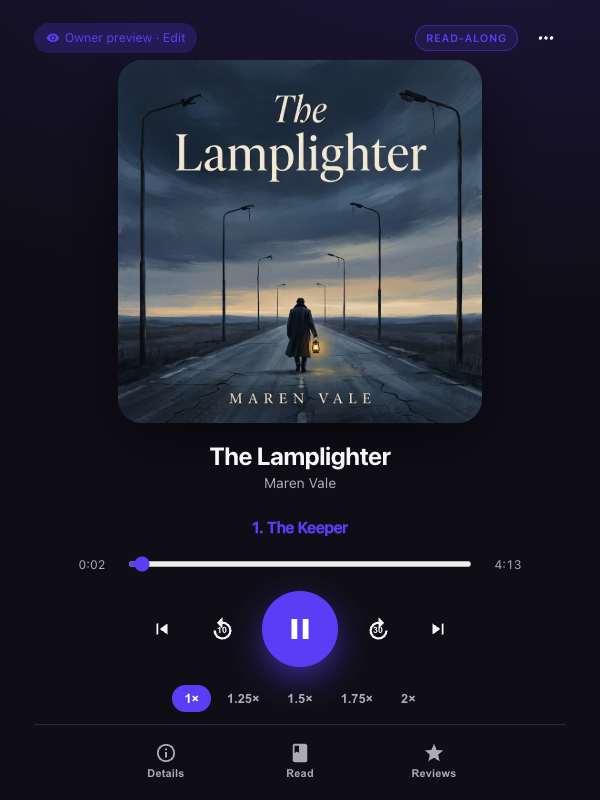
Where the listening actually happens. It installs to the home screen, plays with the screen off, and works on the underground.

The player

Every screen above is the running app, photographed by our own test suite. Nothing here is a mock-up.